Quick Answer: Cast Keyhole Gold Silver Gift for Adults: What to Check First
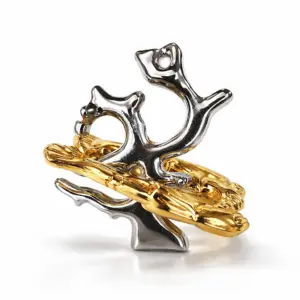
For a compact, desk-friendly adult gift under $20, choose the Cast Keyhole Gold & Silver from Tea-Sip — a two-piece cast metal disentanglement puzzle at $13.99 that fits in one hand, travels in a pocket, and sits on a shelf like a small object of art. The pick changes when the recipient prefers a different shape, wants a harder solve, or already owns several cast-metal puzzles. Three checks confirm the fit before you buy.
Cast metal weighs more in the hand than stamped or laser-cut alternatives because the piece is poured solid rather than cut from sheet. The keyhole form doubles as a display object, which is why it reads as a gift rather than a pure fidget toy. At $13.99 it sits well below typical jewelry price points while still feeling substantial.
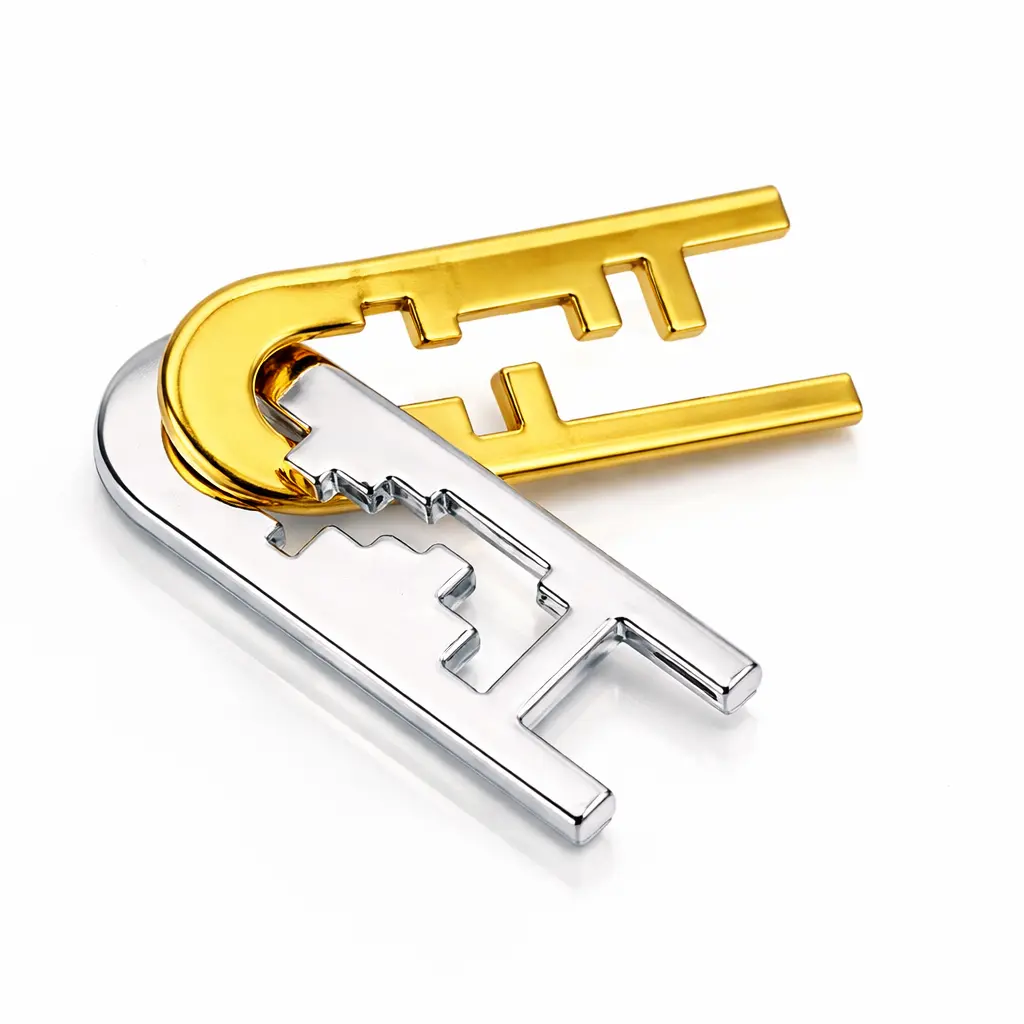
Who should buy this: an adult who already enjoys mechanical puzzles, desk curios, or pocket-sized tactile objects — and who appreciates that the keyhole shape looks intentional on a shelf.
Who should skip it: a recipient who wants a one-step decorative reveal with no hands-on challenge, or someone who dislikes metal objects on a workspace.
Decision table — what to check before you buy
| Factor | What to check | How to verify |
|---|---|---|
| Construction | Cast metal (not stamped, not laser-cut) | Listed as “cast” in the product title and category; cast pieces feel heavier for their size |
| Recipient profile | Solves disentanglement puzzles, or open to tactile challenges | Look for prior fidget or puzzle gifts in their space |
| Difficulty | Easy-to-moderate for first-timers | Pair with a harder cast option for an experienced solver |
| Display value | Keyhole shape reads as a decorative object on desk or shelf | Review the product image for proportions |
| Price | Listed at $13.99 | Confirm current price on the product page |
The single highest-leverage check is construction method. A cast piece is solid throughout, which is what gives it the weight and the sense of a “real object” in the hand. Stamped or laser-cut alternatives are cut from sheet metal and feel lighter, with sharper edges. When a product page uses the word “cast” and shows a thicker cross-section in the photos, that is the visual confirmation.
For a longer look at how the specific Cast Keyhole Gold & Silver piece holds up across a week of daily handling, the cast keyhole gold silver puzzle week-long wear test review tracks the same construction method in regular use.
01. What ‘Cast’ Means in a Keyhole Pendant or Charm, and How to Verify It
A cast keyhole piece is solid metal formed by pouring molten alloy into a mold, most often using lost-wax casting. For an adult gift buyer, this matters because cast construction produces a heavier, more detailed object than stamped or laser-cut alternatives. The weight in the hand is the first verification check — if it feels light and thin, it was probably cut from sheet.
Cast, not stamped. The weight tells you which one you are holding.
What lost-wax casting actually does
Lost-wax casting starts with a wax model of the keyhole shape. The wax is encased in a heat-resistant investment plaster, then melted out — leaving a hollow cavity in the exact form of the original. Molten metal is poured into that cavity, cools, and the plaster is broken away to reveal the finished piece. Every cast object is therefore a one-off pour, and the metal is solid throughout its cross-section.
Sand casting follows a similar principle but uses a compacted sand mold instead of investment plaster. It is faster and cheaper, which is why many small-batch keyhole pieces and metal gift objects are sand-cast. The trade-off is a slightly rougher surface that the maker usually files and polishes by hand. Both methods produce a solid object. Stamping and laser-cutting do not — they start with sheet metal and subtract material, leaving you with a thinner, lighter form.
The four verification checks
When you cannot hold the piece before buying, run through these four checks:
Weight versus size. A cast keyhole in sterling silver or zinc alloy at 4–6 cm will feel heavier than a stamped or laser-cut equivalent of the same dimensions. Read reviews and product photos for scale cues — a coin or a hand in the image tells you more than the listed measurements alone.
Seam-line and sprue marks. Lost-wax castings leave a small raised nub where the molten metal entered the mold. Jewelers file this down, but a faint mark often remains on the back or edge. Sand-cast pieces show a horizontal parting line. Stamped pieces have clean, machine-cut edges with no nubs at all.
Hallmark depth. A genuine metal hallmark — “925” for sterling silver, “14k” or “18k” for gold — is stamped into the surface with enough force to leave a readable impression. Cast pieces accept hallmarks cleanly because the metal is solid. Stamped sheet metal can hold a hallmark, but the impression is often shallower and the surrounding metal may flex slightly when pressed.
Ask the maker directly. Reputable sellers state the construction method in the product description. If the listing says only “metal keyhole pendant” without specifying cast, stamped, or laser-cut, message the seller before purchasing. A maker who casts their own work will say so plainly.
Why the difference matters for a gift
A cast object carries a different psychological weight when unwrapped. The recipient feels the density in the hand before they see the detail, and that first impression sets the tone. A stamped keyhole charm can be attractive, but it reads as a small accessory. A cast keyhole — whether it is a pendant, a desk object, or a metal disentanglement puzzle — reads as a deliberate, considered gift.
This is also why cast objects sit naturally on a desk or shelf after the unwrapping. The weight anchors it. The keyhole shape, rendered in solid metal rather than cut from sheet, holds the eye in a way flat stamped versions do not.
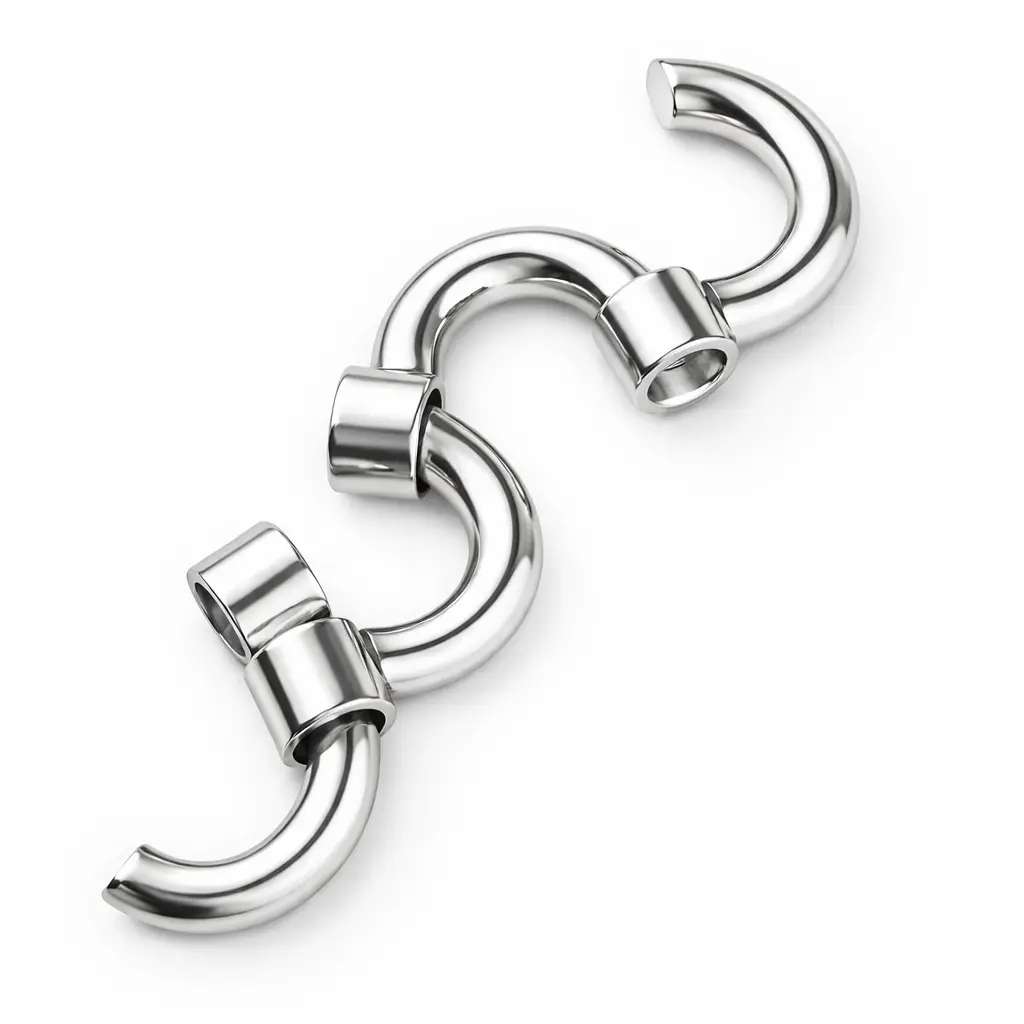
Cast Galaxy 4-Piece Silver — $14.88
The Cast Galaxy 4-Piece Silver above is a useful reference point — a cast metal object at a similar price tier, where comparing the two in hand makes the construction difference immediately obvious. Both share the substantial weight that signals cast work, and both have the slightly softened edges that come from filing down sprue marks after pouring.
For a fuller walkthrough of how cast objects move from molten metal to finished form, the guide on how cast puzzles are made from molten zinc to smooth metal walks the same seven steps. The mold is the same, the filing and polishing are the same, and the final weight in the hand is the same.
A practical summary
If a listing uses the word “cast,” trust it but verify with weight and surface detail. If the word is absent, treat that as a signal to ask before buying. A cast keyhole piece for an adult should feel solid, show honest finishing marks from the mold, and arrive with a clear answer about how it was made. That single check — construction method — is the highest-leverage filter in this entire gift category.
02. How to Match Sterling Silver, Vermeil, 14k, or 18k Gold to the Recipient
The simplest rule: match the metal tone to what the recipient already wears most days. A silver-toned cast keyhole suits a wardrobe built around cool grays, white gold, or mixed metals; a gold-toned cast keyhole suits a daily gold wearer; a dual-tone cast keyhole suits a recipient whose jewelry box you have not inventoried. One observable check, applied at the moment of purchase, removes most second-guessing.
Now that the construction check is settled, the question becomes which metal to specify. For a cast keyhole piece — where the metal itself is part of the visual language, not just a setting for a stone — color match matters more than karat purity. A cast keyhole sits on a chain, a charm bracelet, a lapel, or a display shelf, and the eye reads color first, weight second, and detail third. If the color clashes with the rest of the recipient’s collection, the piece ends up in a drawer.
Sterling silver (or silver-tone cast metal) for casual and mixed wardrobes
A silver-toned keyhole is the most forgiving finish for a gift. It reads neutral against both warm and cool clothing, pairs with denim, oxford cloth, and linen without competing, and photographs well next to a phone camera in the reveal moment. Sterling silver is the metal standard — look for a 925 hallmark stamp on solid jewelry, or a “silver-tone” or “silver plated” disclosure on cast pieces where solid sterling is not used. For most adult gift buyers who do not know the recipient’s exact preferences, silver is the lower-risk default.
Vermeil and heavy gold plate as the middle ground
Vermeil is sterling silver with a thick gold plating layer — legally defined in many markets as at least 2.5 microns of gold over a silver base. It gives the warm color of gold at a lower price point than solid gold, and it wears longer than standard gold plate. For a cast keyhole where the piece is small enough that plating thickness is rarely the limiting factor, vermeil or heavy gold-plate is a sensible middle choice when gold is preferred but the budget does not extend to solid 14k.
14k gold tone for daily gold wearers
If the recipient wears yellow gold every day — a wedding band, a chain they never take off, a watch with gold hardware — a 14k-colored cast keyhole will sit naturally in that collection. In solid jewelry, 14k is stamped 585; in cast decorative pieces, the equivalent is a warm yellow tone without the rose or green cast of lower-karat alloys. The trade-off is that 14k is harder than 18k and holds fine surface detail from casting more crisply, which matters for the small interior cuts of a keyhole shape.
18k gold tone for a richer, deeper color
18k is 75% gold (stamped 750 in solid pieces) and reads visibly warmer and deeper than 14k against the skin. It is also softer and scratches more easily, which is why most daily-wear jewelry is 14k rather than 18k. For a cast keyhole, the 18k tone is the choice when the recipient prefers a richer, almost honey-warm color and the piece will not see heavy daily abrasion — a display piece, an occasional-wear pendant, or a presentation gift.
The dual-tone solution when the recipient is unknown
When you genuinely do not know what the recipient wears — a colleague, a new partner’s family member, a Secret Santa with a wide net — the practical move is a dual-tone cast piece that shows both metals in one object.
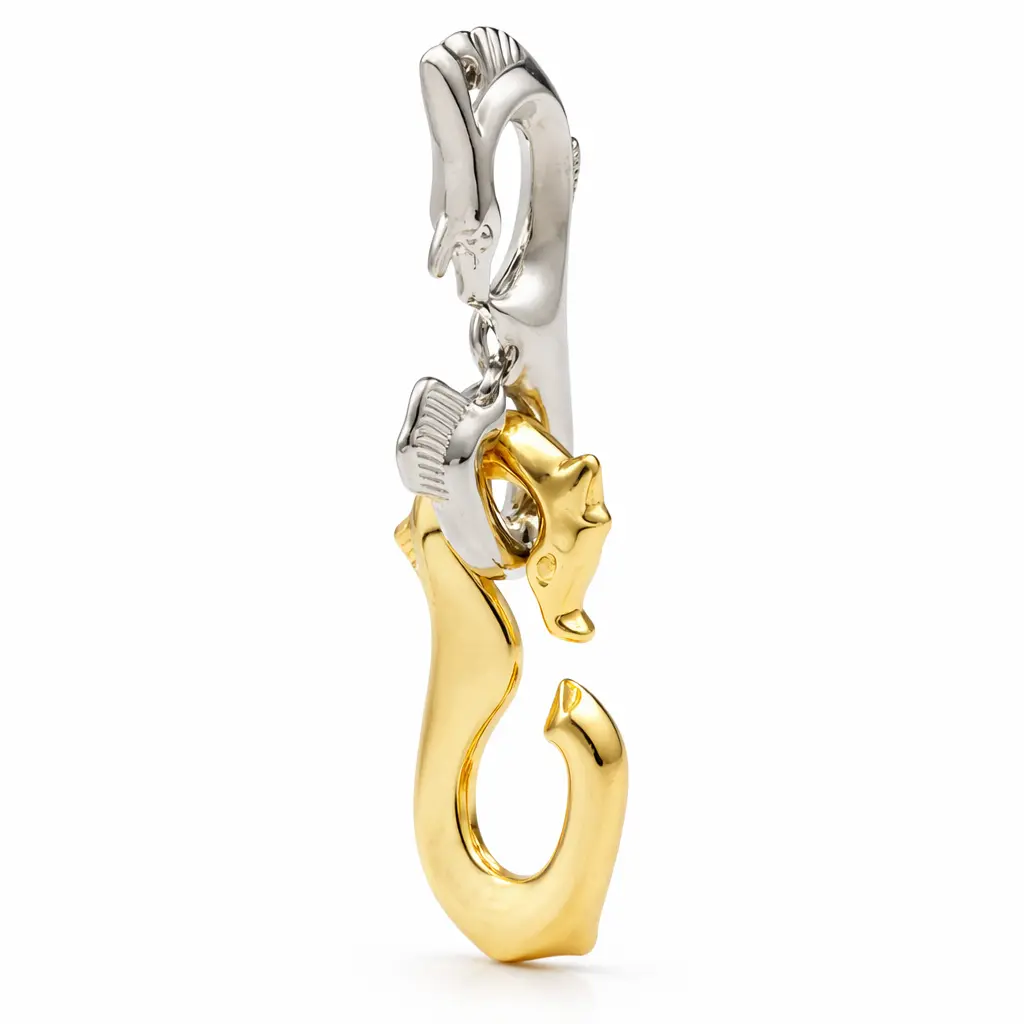
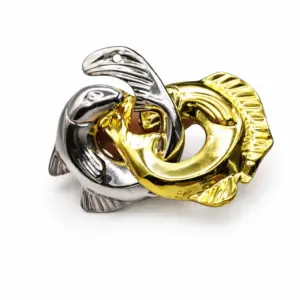
The Dual Seahorse Gold & Silver Brain Teaser above is one example of a single object that carries both finishes, so the recipient can use whichever tone matches the rest of their desk or jewelry box. For a cast keyhole specifically, the same dual-tone logic applies: a keyhole with a gold face and silver back, or a gold-and-silver inlay, removes the color-matching problem entirely without asking the buyer to guess.
One observable check before buying
Before you commit, do this. Pull up two or three pieces of the recipient’s existing accessories in your memory — a watch, a ring, a pair of earrings, a pen on their desk. Note the dominant tone. Warm yellow or rose means gold-tone. Cool white or gray means silver-tone. Mixed means dual-tone. That thirty-second mental check, applied once at the buying moment, is more reliable than any product description.
For a deeper comparison of how different metals feel in the hand and wear over time, the guide on materials used in metal puzzles compared for weight, feel, and durability covers the same six metals from a tactile angle and pairs well with the construction check from section 01.
The practical next action
If you have identified the recipient’s metal preference, choose the single-tone cast keyhole that matches it. If you have not, choose the dual-tone Cast Keyhole Gold & Silver so the recipient decides for themselves. Either way, the metal-matching check — color, weight, and how it will sit in the existing collection — is the second of three checks in this gift guide, and the one most buyers skip.
03. Pendant, Charm, Brooch, or Earring: Which Format Fits the Recipient
Pick the format by how the recipient already wears accessories. Choose a pendant when the recipient wears necklaces or wants one, a charm when an existing bracelet needs a new piece, a brooch for jacket or scarf wearers, and an earring for someone who already wears studs daily. The format choice decides how often the piece gets seen, touched, and worn.
Pendant: the most visible daily-wear format
A pendant hangs at the chest, where it reads first in conversation. For a recipient who already wears a chain, a cast keyhole pendant drops on without changing the routine. The Viking Workshop keyhole pendant with ornament in sterling silver is the clearest reference — a hand-cast piece with a visible bail that sits over an existing chain.
A standalone pendant requires a chain purchase. A cast sterling silver keyhole pendant typically weighs enough to feel present without pulling, but ask the maker for gram weight before buying. Heavier cast pieces need a thicker chain to balance the drop.
Cast pieces also handle engraving on the back better than stamped ones. The solid metal back accepts a short date or initial without flexing. Ask the maker whether they use laser or hand engraving before committing.
Charm: the format that attaches to what already exists
A charm is a pendant with a built-in loop, designed to slide onto a pre-existing bracelet or chain. The Pandora Keyhole Heart Mini Dangle Charm in sterling silver with cubic zirconia and enamel is the clearest reference — a small keyhole with a heart detail and an integrated loop that fits a standard charm bracelet.
Charm sizing is unforgiving. Measure the bracelet’s link width and ask the maker for the charm’s inner loop diameter before buying. A cast charm weighs more than a stamped one of the same size, which is desirable — the weight keeps the keyhole oriented correctly on the wrist rather than spinning flat.
Brooch: the format for the recipient who does not wear necklaces
A brooch sits on a lapel, scarf, hat, or bag strap. For a recipient who does not wear necklaces or earrings, a keyhole brooch is a wearable option that does not require piercing or a chain. A cast sterling silver keyhole brooch needs a working pin and a secure clasp; check both before buying.
Brooches are the format most buyers forget. They also have the widest size tolerance — a 1.5-inch keyhole reads as a deliberate statement piece, a 0.75-inch one reads as a subtle accent. Match the size to the recipient’s wardrobe habits: a brooch on a wool coat is one thing, on a silk scarf another.
Earring: the format that requires an existing ear routine
A keyhole earring is the most format-specific option. The Theodore Men’s sterling silver 925 key-and-loop earring, available with white gold plating, is a reference for a single-keyhole post style. The loop and key together form the visual; without both, the keyhole shape does not read on the ear.
Earrings require a piercing or clip-on conversion. A cast sterling silver earring is heavier in the lobe than a stamped one, and for a recipient with sensitive ears, ask whether the post is solid sterling or sterling-plated base metal. Hallmark depth on a cast post is usually readable, which helps confirm metal content at a glance.
The keyhole shape: why it works as an adult gift
The keyhole reads as a threshold or an opening — the visual language of unlocking, of access granted, of a private space opening to someone. That is why a cast keyhole piece sits well as a gift between adults: it carries a meaning without requiring the giver to explain it aloud.
The motif is restrained. It does not lean romantic, religious, or overtly symbolic, which makes it a safer adult-to-adult gift than a heart or padlock. A cast keyhole can be presented as a quiet acknowledgment rather than a declaration.
Mismatch to avoid
Do not buy a pendant for a recipient who does not wear necklaces. It will sit in a box. Do not buy an earring for a recipient without pierced ears unless a clip-on conversion is confirmed. Do not buy a charm for a bracelet the recipient does not own. The format must match the wearer’s existing habits, not the giver’s preference.
The practical next action
If the recipient wears jewelry, match the format to the existing routine — pendant, charm, brooch, or earring as above. If the recipient does not wear jewelry, or if you are uncertain, a cast metal keyhole object that sits on a desk or shelf is a stronger gift than jewelry that goes unworn. The Cast Keyhole Gold & Silver is built for that reader — a hand-cast metal keyhole in two tones, designed to be picked up, turned over, and solved rather than stored.
04. Cast vs Stamped vs Laser-Cut: What to Check Before You Buy
Cast pieces are solid and weighty; stamped and laser-cut pieces are cut from sheet metal and feel lighter. For a keyhole gift where the recipient may or may not wear jewelry, the construction method is the single check that determines whether the piece feels like a keepsake or a trinket. This is the comparison the listing photos do not show.
Once the format question is settled — pendant, charm, brooch, earring, or a desk object — the next decision is how the metal was actually shaped. The word “cast” on a product listing is a manufacturing claim, not a guarantee of substance. Three construction methods dominate the market for keyhole-shaped pieces, and each one produces a noticeably different object in the hand.
Lost-wax cast. Molten metal is poured into a mold made from a wax original, then the wax is melted out before pouring. The result is a solid piece with no internal cavity, fine surface detail preserved from the original model, and a substantial weight relative to its visible size. The hallmark on a cast piece is typically struck deeply into the metal because there is solid material beneath the stamp. Most artisan keyhole pendants, charms, and brooches in sterling silver, 14k, or 18k gold are made this way.
Stamped. A die presses the keyhole shape out of sheet metal, leaving a flat or shallow-formed piece. Stamped pieces feel lighter, often have sharper pressed edges, and may have a hollow back if the design is double-sided. The hallmark, if present, is usually laser-etched rather than struck, because the metal beneath the surface is thin.
Laser-cut. A laser traces the keyhole outline through sheet metal, often leaving a flat, paper-thin silhouette with a smooth, slightly melted edge. These pieces feel the lightest of the three, are usually the least expensive, and rarely carry a struck hallmark. They are common in fashion and trend-driven keyhole jewelry at lower price points.
| Construction Method | How It Feels in the Hand | Typical Weight Signal | What to Check Before Buying |
|---|---|---|---|
| Lost-wax cast | Solid, smooth, slightly cool to the touch | Noticeable weight for its size; the piece “sits” in the palm | Hallmark depth, ask the seller to confirm the method in writing |
| Stamped | Lighter, may flex slightly if thin, edges can feel sharp | Comparable to a coin of the same overall size | Sheet thickness, presence of a struck or laser-etched hallmark |
| Laser-cut | Lightest, flat or near-flat, smooth melted edges | Feels like a thin charm or a cut coin | Material spec, gauge of the metal, whether it is plated or solid |
Cast, not stamped. The weight tells you which one you are holding.
The verification check matters most when the listing is ambiguous or the price is low for the metal claimed. A cast sterling silver keyhole pendant and a laser-cut silver-plated keyhole charm can both be photographed on a white background and labeled “silver keyhole gift” — but they will not feel alike in the hand. To confirm before purchase, ask the seller directly whether the piece was lost-wax cast or cut from sheet, and whether the hallmark is struck or laser-etched. A reputable maker answers in one sentence.
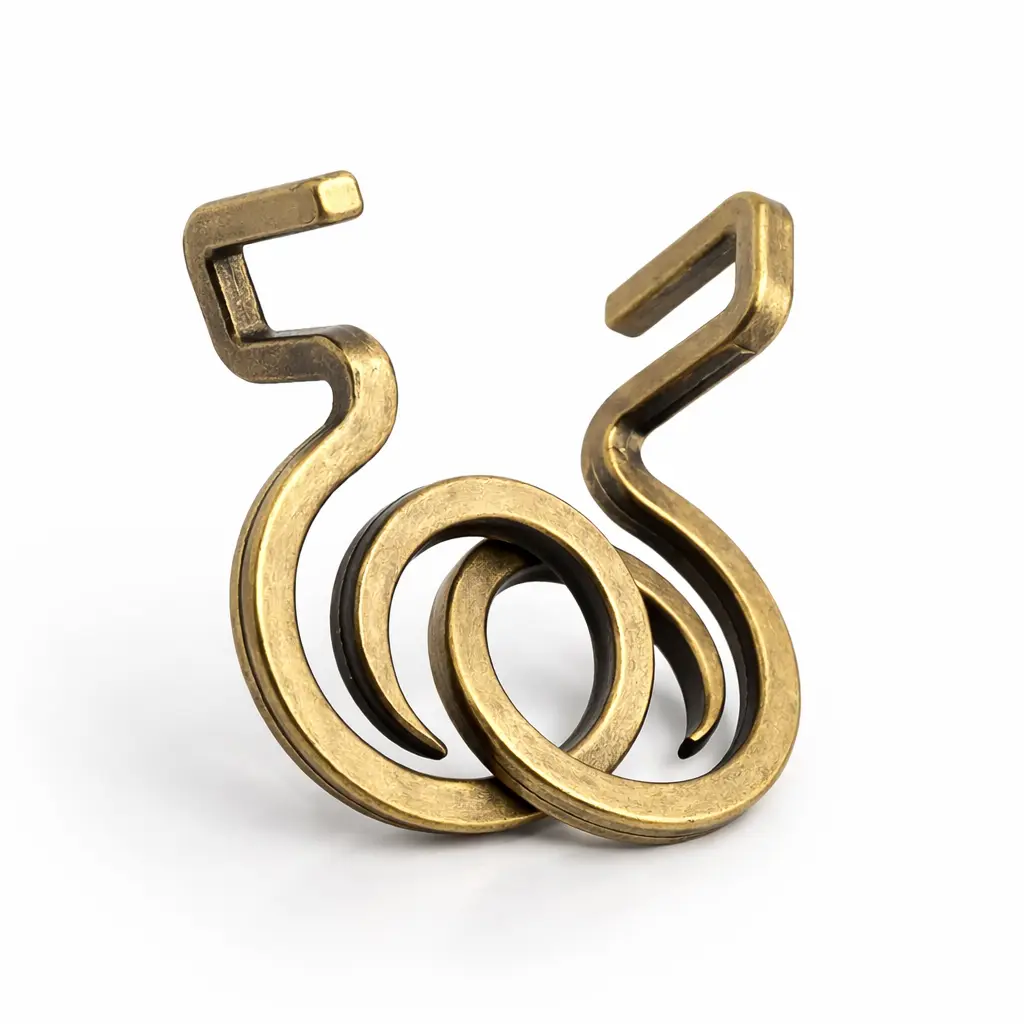
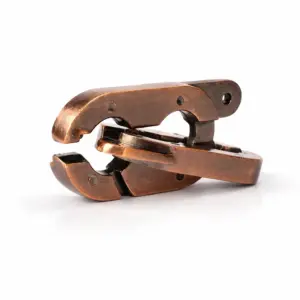
A practical way to internalize the difference is to handle a known cast metal object before buying. The Cast Hook Metal Brain Teaser is a small hand-cast piece in mixed metals that you can weigh in the hand and compare against any jewelry candidate — the substantial weight in the palm is the cast signature.
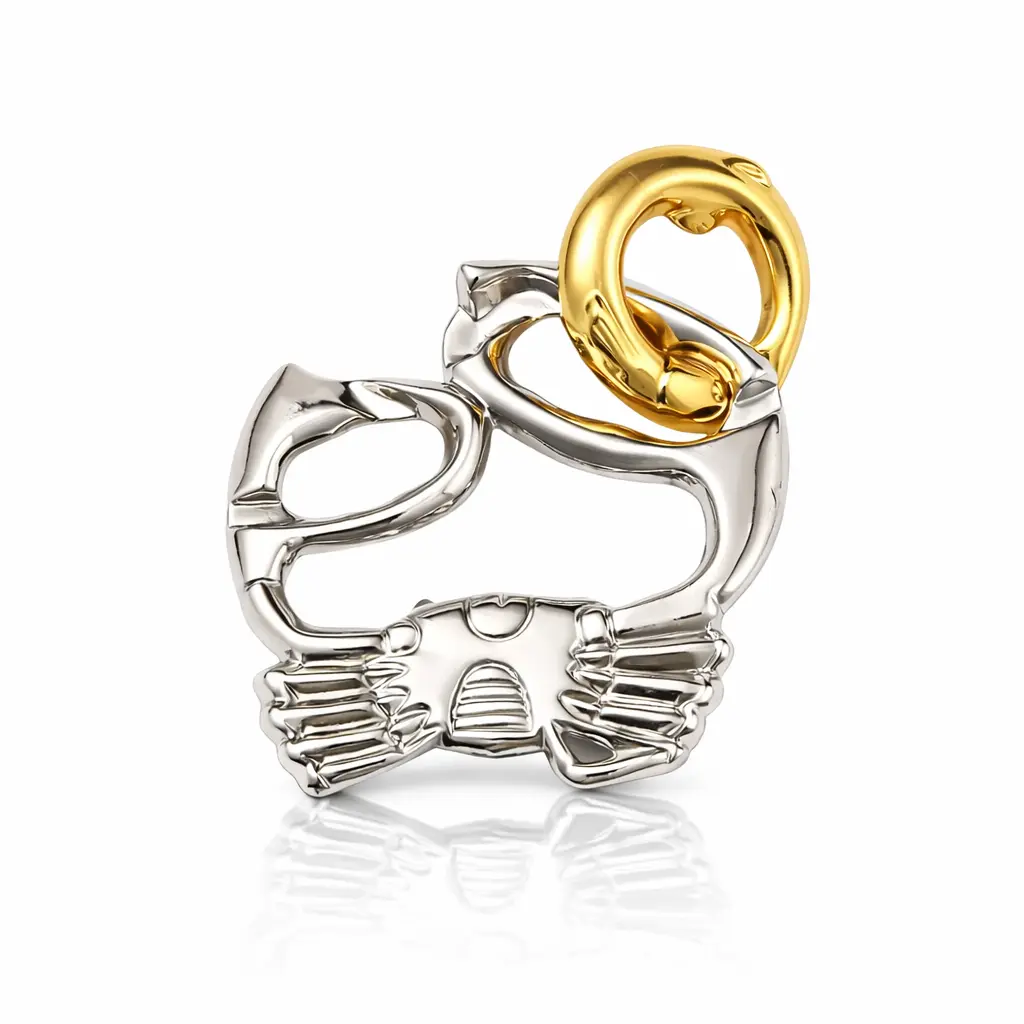
The Metal Crab Puzzle Cast Brain Teaser with Gold Ring is another solid cast reference point — heavier than its size suggests, with a struck-depth feel to the metal that a stamped or laser-cut piece cannot replicate.
The practical next action
If the listing is ambiguous, ask the seller to confirm the construction method in writing before purchase. A one-line reply — “this piece is lost-wax cast sterling silver” — is enough to verify the claim. If the seller cannot or will not confirm, treat that as a signal to keep looking rather than a reason to assume the piece is what the photo suggests.
Frequently Asked Questions
The verification instinct from the last section — check the construction, confirm the metal, weigh the piece — applies to every question buyers raise before committing. The answers below close each gap the listings leave open, with a concrete check you can run before ordering.
What does “cast” mean in a keyhole pendant?
Cast means the pendant was formed by pouring molten metal into a mold. Most jewelry castings use lost-wax casting, where a wax model is encased in plaster, melted out, and replaced by molten silver or gold. The result is a solid piece with substantial weight and surface detail that stamped sheet metal cannot match.
Is a cast pendant heavier than a stamped one?
Yes, almost always. A stamped or laser-cut pendant is cut from sheet and may be thin or hollow-backed. A cast pendant is solid throughout. Compare two similar-sized pieces and the cast one will feel like a small object with real presence in the hand.
Sterling silver or 14k gold — which is better for a keyhole gift?
It depends on what the recipient already wears. Sterling silver suits casual wardrobes and mixed-metal layering. 14k gold suits someone who wears yellow gold daily and wants the piece to match an existing chain. 18k is right when a richer, warmer tone matters more than hardness. Vermeil — sterling silver with a thick gold plating — is the middle-ground option.
Can a keyhole pendant be engraved on the back?
Many cast pendants have a flat enough reverse for engraving, but the surface must be broad and smooth. Ask the maker before ordering, and send the engraving text in writing so the choice is reversible only by a new piece, not a re-cast.
What does a keyhole symbolize in jewelry?
The keyhole motif carries two meanings that suit adult gifts: a threshold about to open, or a secret kept. Pair it with a matching key pendant if the gift is for a couple. Keep the symbolism to one or two lines when presenting — the wearer will fill in the rest.
How do I know if an online keyhole pendant is really cast metal?
Check the listing for weight in grams, look at hallmark depth, and inspect photos for mold seam lines. Then ask the seller directly. A one-line reply — “this piece is lost-wax cast sterling silver” — is enough. If the seller cannot confirm, treat that as a signal to keep looking.
What size keyhole pendant looks right for everyday wear?
Most everyday keyhole pendants measure 20–30mm tall on a 45–50cm chain, sitting at or just below the collarbone. Larger pieces (35mm and up) suit longer chains or sweaters. The simplest check: hold the photographed pendant against a ruler on screen before buying, and measure the chain length against one the recipient already wears.
Does cast sterling silver tarnish like regular silver?
Yes. Cast sterling tarnishes at the same rate as any other sterling because the alloy is identical — 92.5% silver, 7.5% copper. Store it dry and polish with a treated cloth, and the patina will stay even rather than blotchy.
The practical next step
Match the metal to what the recipient already wears, confirm the construction method with the seller in writing, and only then choose size and format. If a wearable cast keyhole piece is not the right fit — the recipient prefers a desk object or a tactile metal challenge over jewelry — a solid cast metal item in gold and silver tones delivers the same substantial weight in a different format. The Cast Keyhole Gold & Silver ($13.99) from Tea-Sip uses the same construction principles in a hands-on format. Verify the current price and product details on the product page before ordering.
Where to Start
If the recipient and occasion checks above match, start with Cast Keyhole Gold & Silver. Check the current product page for the specifications that matter to your choice.
Sources and verification
- Product details and current specifications: Tea-Sip product page
Last updated: August 24, 2026