Quick Answer
A cast metal puzzle works as a gift for an autistic adult when it offers satisfying tactile feedback, a difficulty that matches the recipient’s frustration tolerance, and a presentable desk presence. Choose Level 1–2 disentanglements for repeatable focus, Level 3–4 for a persistent puzzler, and skip pieces with very small parts for anyone with motor sensitivities.
Three checks run through the rest of this guide. Tactile fit — how the metal feels in the hand, including weight, edge finish, and how the pieces move. Difficulty match — solve time and challenge level set against the recipient’s frustration tolerance, not their skill. Presentation — whether the piece looks at home next to a laptop or a book, not out of place as a toy.
Start Here by Recipient Profile
| Recipient | Starting Pick | Mechanism | What to Verify |
|---|---|---|---|
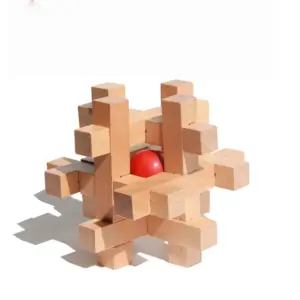
| Wants repeatable, low-frustration focus | Cast Hook Metal Brain Teaser | Disentanglement | Piece size and edge smoothness |
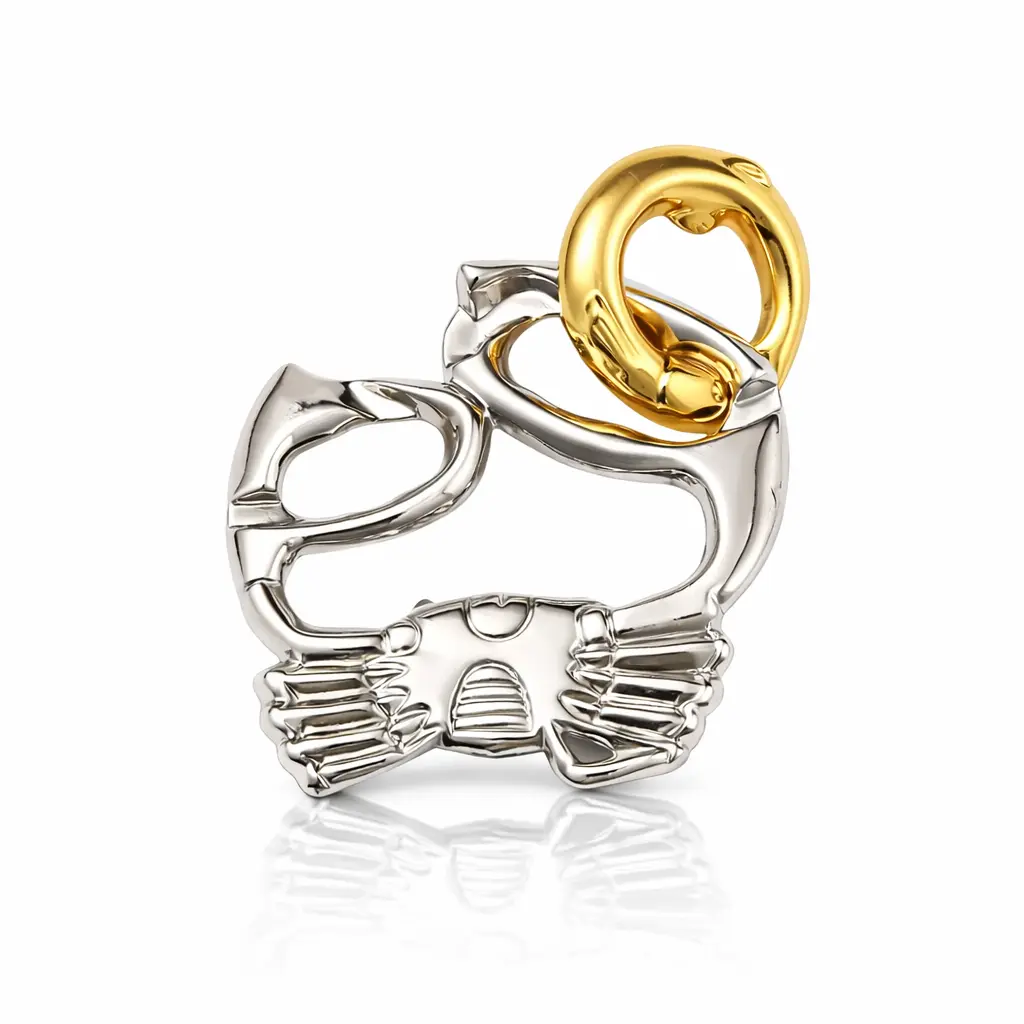
| Enjoys visual challenge, re-solves often | Metal Crab Puzzle with Gold Ring | Interlocking | Joint stiffness and metal finish |
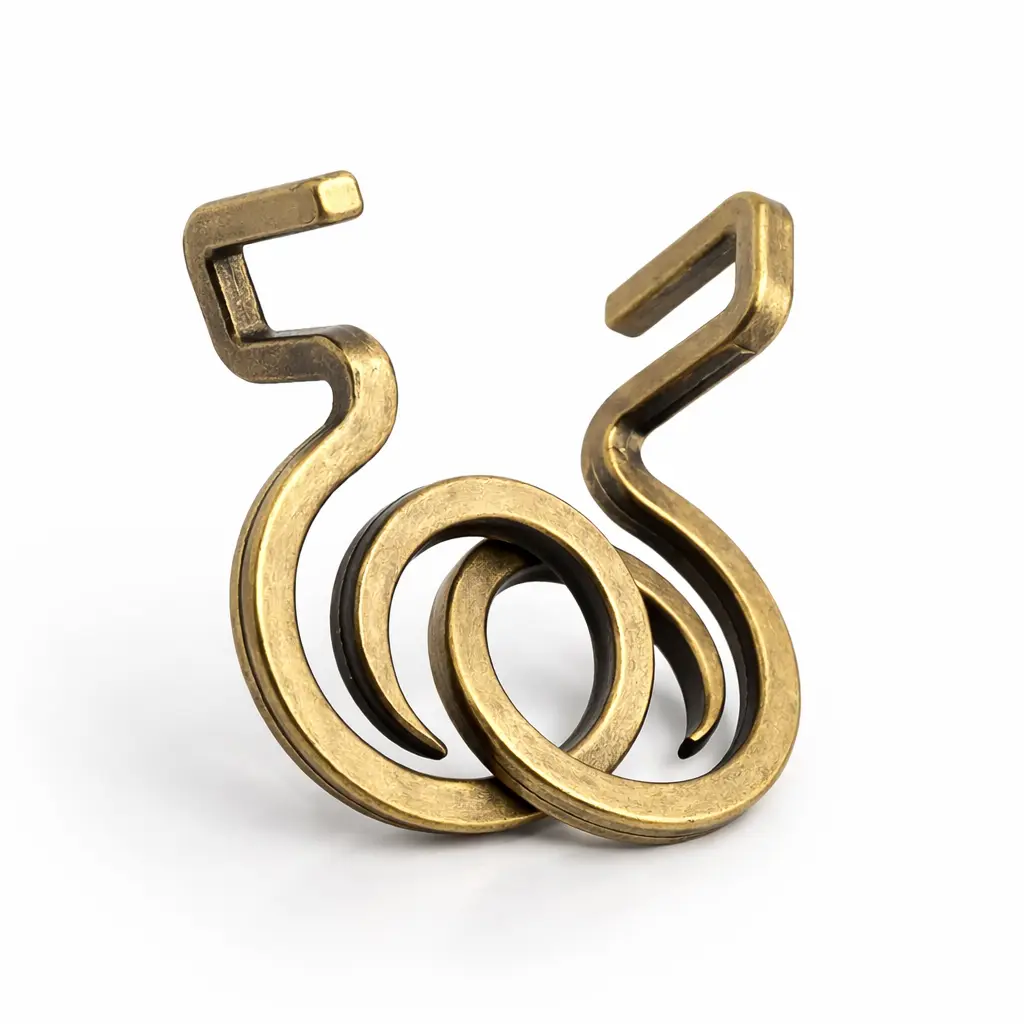
| Likes a step-up, persistent puzzler | Cast Coil Pocket Puzzle | Sequential | Part size and hand weight |
If tactile fit feels right and the difficulty matches their patience, this is a gift that gets used. If either check fails, no amount of metal weight will save it. For desk presence, look for pieces with clean lines and a visible mechanism — those read as adult objects, not as fidget toys, and they invite the hand back into the focus loop again and again.
01. Why Cast Metal Puzzles Fit Many Autistic Adults
A cast metal puzzle tends to fit an autistic adult when four observable mechanics line up: the weight feels right in the hand, the click or slide of moving parts is satisfying, the solve-reset loop invites repetition rather than frustration, and the object reads as adult on a desk. Skip the gift if any one of those four fails.
Those mechanics are not abstract. They are conditions a buyer can check before purchasing, and they are the same conditions a cast disentanglement puzzle is designed around. A piece that wins on all four tends to be picked up again the next evening. A piece that loses on any one tends to migrate to a drawer. The difference is rarely about intelligence or skill — it is about whether the mechanism matches the hands and the patience of the person holding it.
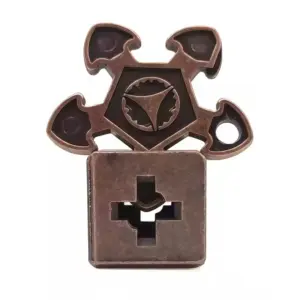
Weight is the first check. A cast metal puzzle should feel substantial without feeling awkward to grip. Picked up, it should announce itself. Put down, it should stay where it is rather than skitter across a surface. When a piece has noticeable weight in the hand, the act of solving it carries a small physical consequence — a turn of the wrist, a tilt, a moment of repositioning — and that consequence is part of what makes the object feel real rather than disposable. The Cast Hook Metal Brain Teaser sits in this range, with a compact cast form that gives the hand something to anchor on without tiring the wrist.
The click matters. When two metal parts slide against each other, the sound and the resistance together tell the solver whether the move was correct. A clean click signals progress; a mushy slide signals nothing. Cast puzzles from quality foundries tend to have tight, repeatable tolerances — the same move feels the same way each time, which is exactly the sensory consistency that many autistic adults look for in objects they handle often. Buyers can verify this by checking product photos for visible machining and reading descriptions for mentions of smooth or tight mechanisms.
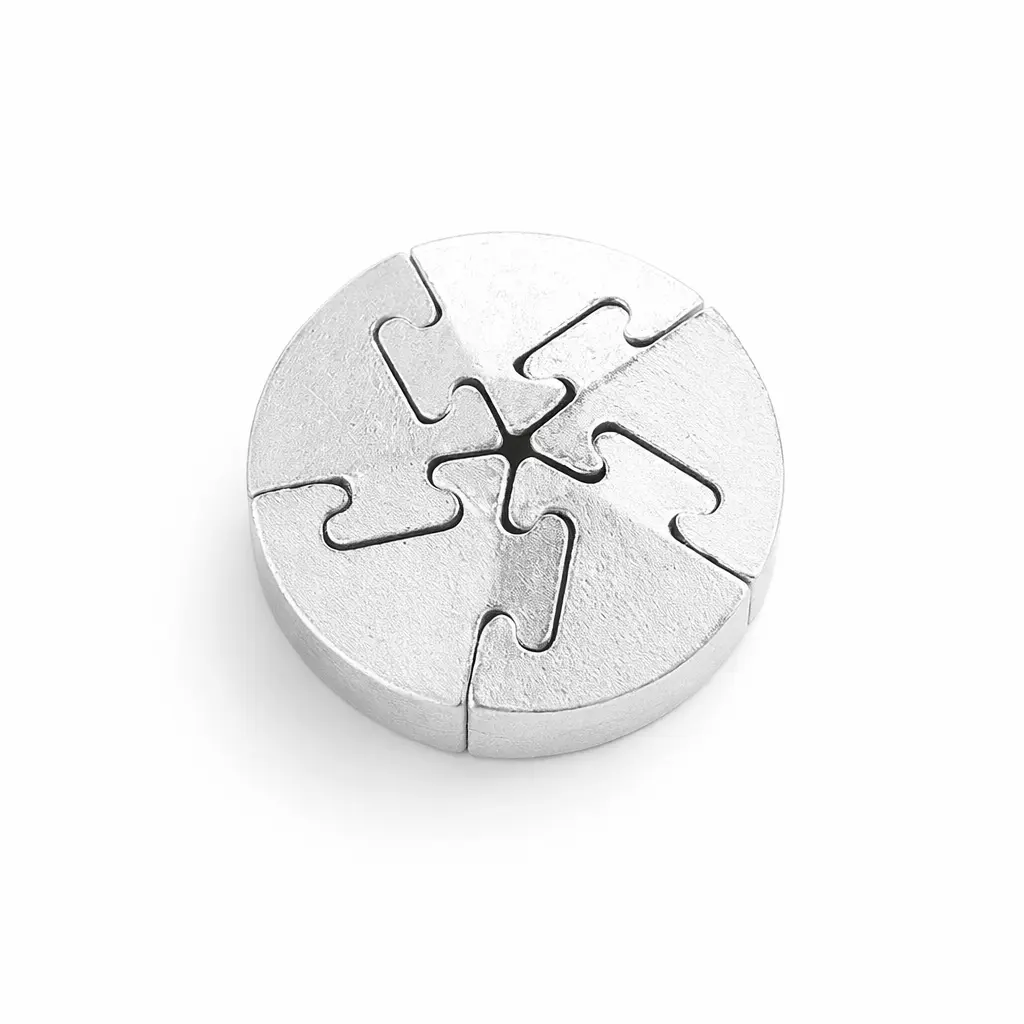
Repetition is the third mechanic. A puzzle that only works once has a single peak moment and then declines. A puzzle that works as a focus loop — solved, reset, solved again — turns the mechanism into a ritual. The 5 Piece Cast Spiral Metal Puzzle is built around this loop: its interlocking metal segments separate and reassemble through a sequential motion that can be repeated without wearing out the parts, and the satisfaction comes from the smoothness of reassembly as much as from the original solve. This is the difference between a one-time brain teaser and a desk object that gets picked up during a phone call or before bed. Wikipedia frames fidget objects as items handled for sensory input or focus support, which contextualizes a cast metal puzzle as an analog focus object rather than a clinical device — a tool for a routine, not a treatment for a condition.
Visual calm is the fourth. Metal on a desk reads as adult. It does not look like a toy, does not need a charging cable, and does not invite the social awkwardness that a brightly colored plastic spinner sometimes does. For a gift-giver worried about whether a puzzle is “too childish,” the look of the object is often the deciding factor. Pieces with clean lines, a single mechanism, and a visible join — the 5 Piece Cast Spiral, the Cast Hook, the Metal Crab with its gold ring accent — tend to read as objects an adult would own, not objects an adult would hide when company arrives. For readers weighing this gift against other puzzle toys for autistic adults tested for sensory relief, the four mechanics above are the ones to apply before choosing any single piece.
02. Matching Hanayama Difficulty Levels to the Recipient’s Frustration Tolerance
Match a cast metal puzzle’s difficulty to the recipient’s frustration tolerance, not to their stated skill. A high-difficulty puzzle that triggers shutdown defeats the gift’s purpose more thoroughly than an easy one ever could, because the recipient remembers the failure rather than the mechanism. The level that produces a repeatable focus loop is the level that gets re-solved on quiet evenings, not the one that sits solved in a drawer.
The Hanayama 1–6 rating system grades puzzles by solve complexity, not by solve time. A level that takes a persistent puzzler three minutes and a first-timer three days still carries the same number. For gift-matching, translate the scale into tolerance rather than minutes. Levels 1–2 read as repeatable focus: the mechanism yields within a few minutes of patient exploration and stays satisfying to re-solve because the motion itself feels good in the hand. Levels 3–4 read as a satisfying challenge: the path requires observation and a few wrong turns, but the solution is reachable in a single sitting. Levels 5–6 read as a long-project puzzle: think of them as weekend companions, not quick desk breaks, and they suit a recipient who already collects cast metal puzzles and treats each one as a small project.
Run three checks before purchase. First, tactile preference. A recipient with smaller hands or a sensory aversion to tight fits may find a compact puzzle with a smooth cast surface easier to manipulate than a multi-piece assembly that demands precise alignment. Second, frustration tolerance. Has the recipient abandoned a similar puzzle mid-solve before? If yes, step down a level. The satisfaction of completion builds the habit; the frustration of abandonment breaks it. Third, display intention. A puzzle that lives on a desk earns its keep through repeated handling, so choose a level that invites re-solving rather than trophy display.
For a recipient who wants the focus loop without the project, the Cast Coil Pocket Puzzle sits in the mid-tolerance range. The two intertwined coils require patience but yield to a single eureka moment, and the pocket scale keeps it presentable next to a keyboard or in a coat pocket.
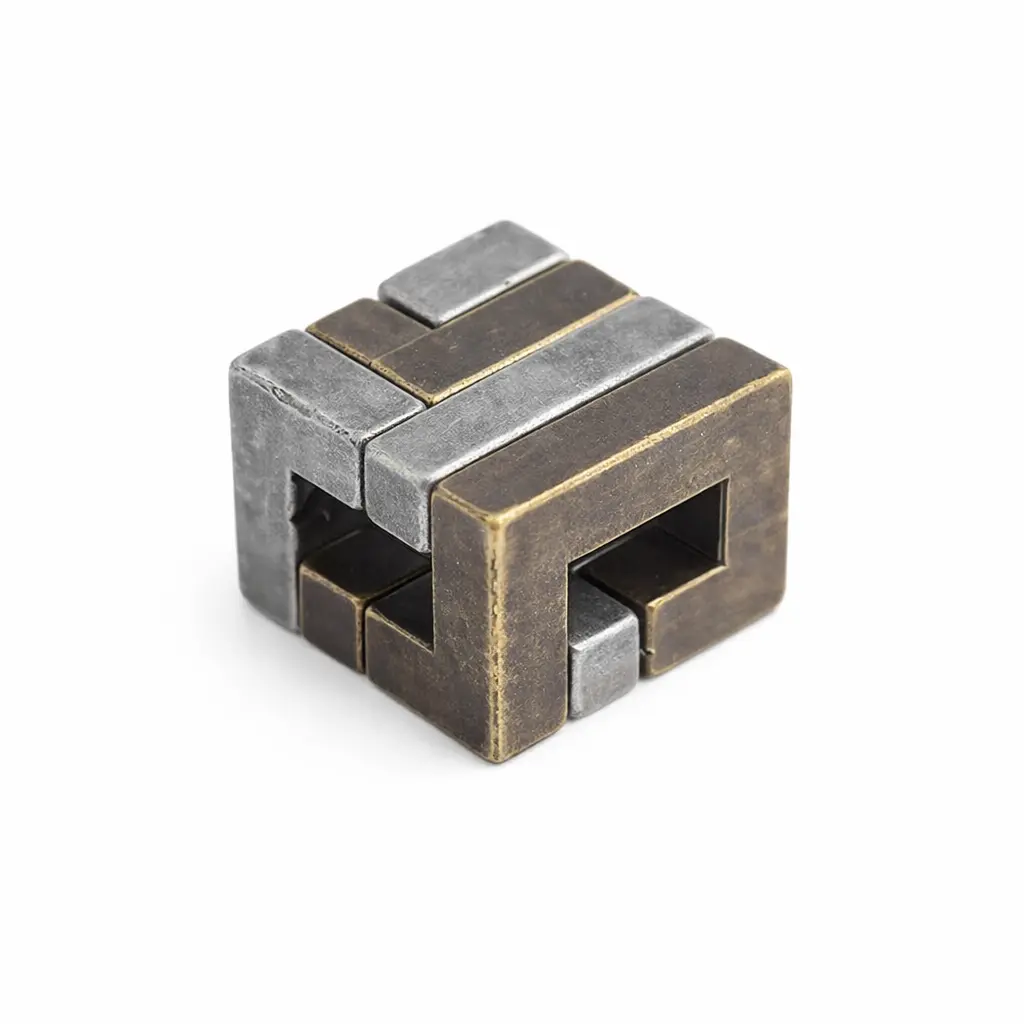
Cast Coil Pocket Puzzle — $18.99
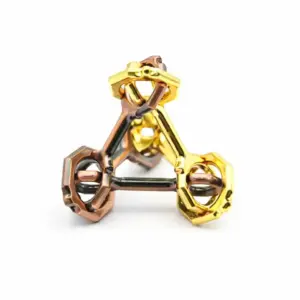
Step up from there for a recipient who enjoys a longer, more deliberate mechanism. The Cast Coil Triangle Puzzle adds a third component and a more complex internal path, landing it closer to the high-tolerance end of the mid-range. The triangle silhouette also reads as intentional decor rather than novelty.
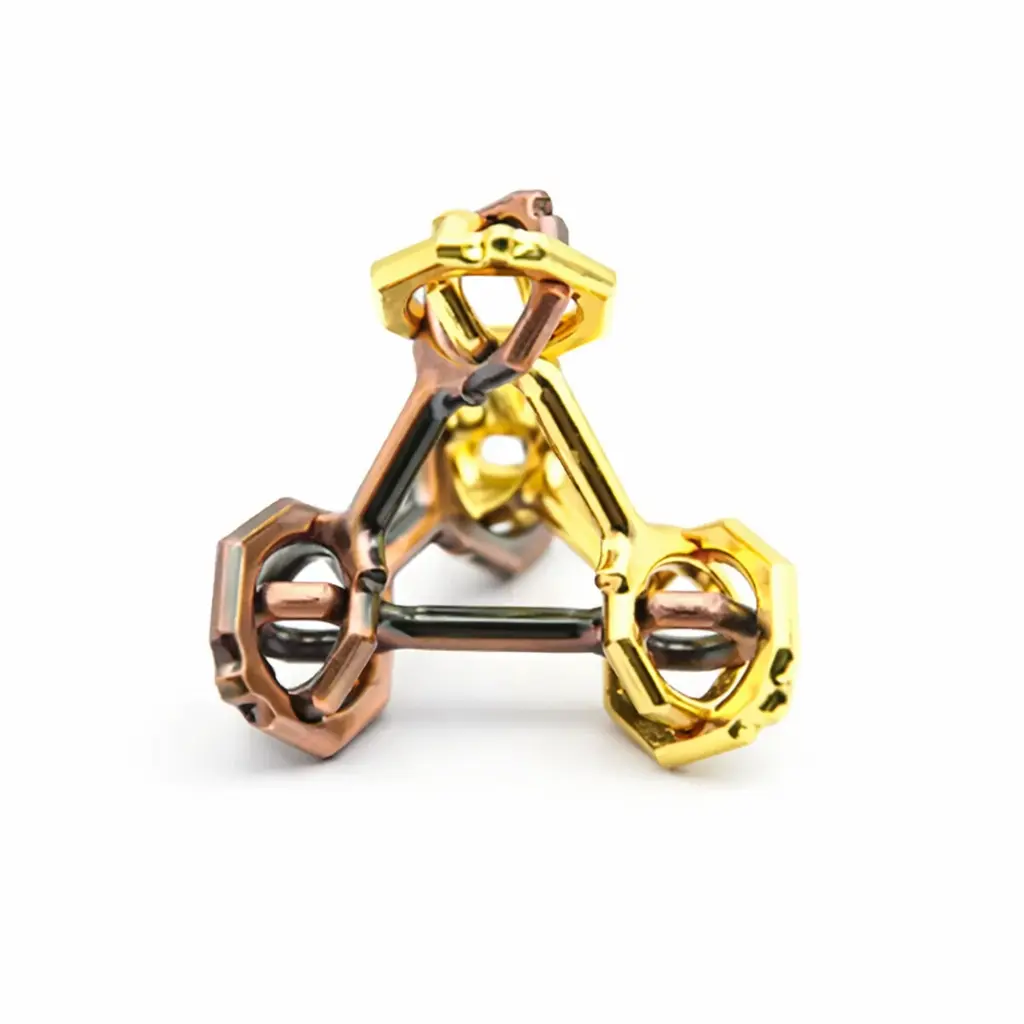
Cast Coil Triangle Puzzle — $25.99
The one practical next action: match the level to tolerance, not to skill, and verify the recipient’s relationship with previous puzzles before committing to anything above the mid-range. For a deeper look at how level numbers translate into actual minutes or days of solving, the puzzle difficulty rating system explained walks through the gap between rated level and real-world solve time.
03. What Each Cast Metal Mechanism Actually Feels Like in the Hand
Once the difficulty level feels right, the next check is the mechanism itself, because how a cast metal puzzle moves in the hand determines whether it becomes a calm focus loop or a frustrating dead end. A disentanglement puzzle feels like two metal shapes that have to find their way apart. An interlocking puzzle feels like a tight mechanical join you have to coax open. A sequential-discovery puzzle reveals a hidden compartment or motion at the end.
The category matters because each mechanism recruits a different kind of attention. Disentanglement puzzles, the family that includes the well-known Cast Loop and Cast Keyring designs from Hanayama, are typically two interlocking pieces — a hook and ring, a bar and loop, or two curved bars that thread through each other. The fingers trace the seam, the wrist rotates the two halves in opposite directions, and the puzzle gives way only when the eye catches the exact angle where the path opens. The sound is quiet — a faint scrape of metal, sometimes a soft click at the moment of release. Once solved, re-solving takes seconds because the path is remembered, which is what makes a disentanglement a strong focus loop rather than a one-time object.
Interlocking puzzles, by contrast, carry three or more solid pieces that lock together through shaped cutouts rather than threading. Think crab claws, spiral bands, or multi-band rings. The fingers have to find the right orientation for each piece before any one can move, and the puzzle has a physically “stuck” feeling until the correct sequence falls into place. The sound is more distinct — a firm metallic click when pieces seat, and a different, cleaner click when they release. The metal crab in the cast brain teaser line shows this mechanism clearly: the gold ring is decorative, but the crab body’s interlocking parts are where the challenge actually lives.
Sequential-discovery puzzles run on a different rhythm. Each move unlocks the next, so the puzzle is less about exploration and more about following a known path with deliberate, confident hand motions. Models like the Cast Devil and Cast Helix sit in this family, and the 5 Piece Cast Spiral Metal Puzzle from Tea-Sip follows the same pattern. This style suits a recipient who likes routine and predictability more than open-ended searching, because the satisfaction comes from executing the sequence cleanly rather than from finding the trick.
What you can verify in a product photo: the number of pieces, the approximate size, the finish (matte, polished, plated), and whether edges look sharp or rounded. Reputable listings include a hand or ruler shot for scale — use that to gauge whether the puzzle will sit comfortably in the recipient’s grip.
What requires handling: weight balance (does it sit evenly or tip?), smoothness of the slide (do the pieces glide or grind?), click firmness (does the release feel satisfying or flimsy?), and any sharpness on edges. These tactile qualities are the difference between a puzzle that feels premium and one that feels cheap, and they are the qualities a buyer should ask the recipient about — or check in person — before committing to a higher-difficulty model. As the Wikipedia entry on mechanical puzzles notes, the category is defined by physical manipulation, so tactile fit is the whole point.
The one practical next action: read the mechanism description before you read the difficulty rating. A predictable sequential puzzle at a higher difficulty carries less frustration risk than an open-ended disentanglement at the same number, because the recipient always knows what kind of attention the puzzle is asking for. For readers curious about what makes a zinc alloy cast puzzle feel high quality, the click and weight balance described in that breakdown are the same traits to look for when handling any cast metal mechanism.
04. Hanayama Models Worth Considering and How to Compare Them
A shortlist of four widely available Hanayama models — Cast Loop, Cast Keyring, Cast Helix, and Cast Devil — covers the main mechanisms and difficulty bands a buyer is most likely to want. Each one illustrates a different tactile experience, which makes comparing them useful even if the gift you ultimately choose comes from a different maker. The Tea Sip analysis of Hanayama vs generic cast puzzles quality comparison covers why the brand-level casting and tolerance differences matter for the recipient’s hands.
Cast Loop is a two-piece disentanglement: a small ring threaded onto a curved metal track. It is commonly cited as a beginner-friendly puzzle, sitting near the lower end of the Hanayama 1–6 scale, and the motion is a slow slide-and-rotate that produces a soft click when the ring releases. The weight is light, the pieces are smooth, and it re-solves quickly. The tactile loop is the draw.
Cast Keyring is a similar two-piece disentanglement, but shaped like a key, with the ring riding a notched path. It also sits at the low end of the scale and is often recommended as a first metal puzzle. The motion is short and discrete, which makes it a good fit for someone who wants a focus loop they can complete in a few minutes without committing to a longer solve.
Cast Helix shifts the mechanism. Two interlocking spirals must be separated through rotation and gentle pressure. It sits in the middle of the scale and asks for more sustained attention. The hand motion is smoother than a disentanglement, and the piece has a sculptural quality that tends to display well on a desk between sessions.
Cast Devil is a multi-piece interlocking puzzle — several cast elements fitted together — and it generally sits at the higher end of the Hanayama difficulty scale. The challenge is not just disentangling but understanding how the parts relate. It tends to suit a persistent puzzler rather than someone who wants quick resolution.
| Model | Mechanism | Difficulty Range | Tactile Feel | What to Check |
|---|---|---|---|---|
| Cast Loop | Two-piece disentanglement | Lower end of 1–6 scale | Light, smooth, soft click | Verify the ring is securely attached; check for sharp edges on the track |
| Cast Keyring | Two-piece disentanglement | Lower end of 1–6 scale | Compact, short slide, firm click | Confirm the key shape doesn’t catch on fingers; inspect notch finish |
| Cast Helix | Rotational spiral separation | Middle of 1–6 scale | Continuous rotation, even weight, sculptural | Check spiral tension isn’t too tight for a weaker grip |
| Cast Devil | Multi-piece interlocking | Higher end of 1–6 scale | Heavier, more parts, complex motion | Confirm the piece count is manageable; verify each element is smooth |
The right mechanism almost never disappoints. The wrong difficulty often does.
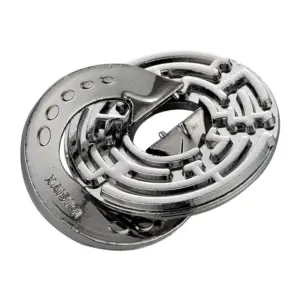
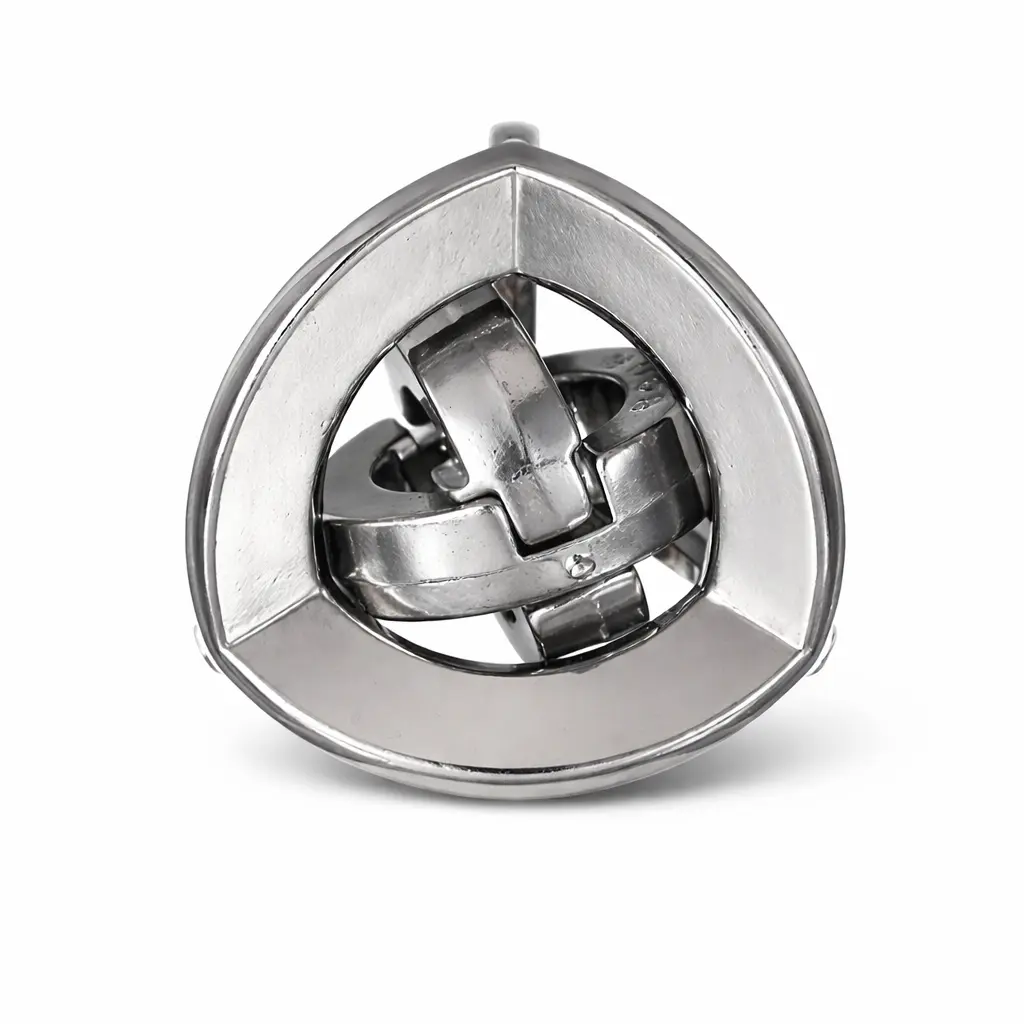
If the Hanayama catalog isn’t accessible, the Metal Orbit Ring Cast Puzzle offers a similar ring-and-curve disentanglement in cast metal — a compact two-piece design that sits well in the hand and re-solves without wear.
The one practical next action: once a recipient profile is in mind, pick one model from the shortlist that matches the mechanism preference and the difficulty band, then verify the tactile fit using the product photo and listing description before buying. Difficulty is the most common frustration trigger. Mechanism is the part that almost always works out.
05. Small Parts, Sharp Edges, and What to Verify Before Buying
Before gifting a cast metal puzzle, verify the piece has no sub-one-inch removable parts, no sharp casting flash along the seams, and a weight that sits comfortably in the recipient’s hand — physical fit is the decision point that mechanism and difficulty alone cannot fix. Difficulty is the most common frustration trigger, but tactile mismatch is the one that makes the gift quietly disappear into a drawer.
For some autistic adults, the first sensory question is temperature. A zinc-alloy or cast metal piece pulled from a winter mailbox feels cold against the skin; the same piece warms quickly once held, and the weight transfers a steady, grounding pressure that many recipients find calming. For others, that same heaviness registers as unpleasant. The way to know in advance: read the product’s listed dimensions and compare them to the recipient’s hand span, not to a ruler. A cast puzzle size comparison guide can put each model’s measurements side by side so you’re not guessing from one listing to the next. A puzzle that fits inside a closed fist with room to spare is a different tactile experience from one that needs two hands to rotate.
The second verification is material honesty. Solid cast metal (zinc alloy, brass, stainless steel) holds up to re-solving, carries real weight in the hand, and develops a soft patina over time. Plated plastic or hollow castings look similar in product photos but feel hollow, click with a plasticky ring, and rarely survive more than a few solves. The product listing should state the material explicitly; if it only says “metal-style” or “metal finish,” treat that as a flag to ask the seller or skip the listing.
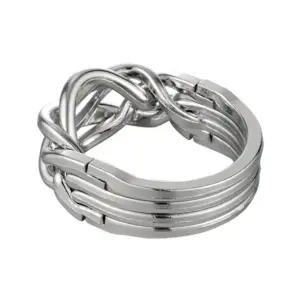
A third check: separable sub-parts. Some cast puzzles are a single interlocking piece. Others — multi-band puzzle rings, four-piece galaxy assemblies — come apart into smaller components. For a recipient who mouths objects, has a young sibling nearby, or has fine-motor sensitivities that make small parts frustrating, a single-piece disentanglement is the safer gift. The mechanism in a one-piece cast puzzle still rewards focus and tactile engagement without introducing loose hardware.
Finally, confirm the return policy before buying. A cast metal puzzle that sounds right on paper may feel wrong in the hand — too cold, too heavy, too loud when the pieces click. A returnable purchase removes the guesswork for a gift you can’t hand-test in advance.
The last decision point is the one that determines whether the gift lasts: does the puzzle reward re-solving, or does it work once and lose its pull? A focus loop — a mechanism that gives a satisfying click, reset, and re-solve cycle — is the gift that stays on the desk and earns its desk presence. A one-time trick is a gift that ends up on a shelf. Look for puzzles where the motion itself is the reward, not just the moment of separation. That’s the difference between a present and a habit.
Frequently Asked Questions
A cast metal puzzle suits an autistic adult when it offers a single-piece disentanglement, a difficulty that matches frustration tolerance, and a presentable desk form factor. The five questions below cover how to verify each of those conditions before buying, and what to confirm at checkout.
Is a cast metal puzzle too childish for an adult gift?
No. Cast metal puzzles are designed as desk objects for adult solvers — weight, finish, and mechanical precision are all intended for repeated handling. The same mechanism that engages a neurodivergent adult also reads as presentable in a shared workspace: a desk accessory first, a brain teaser second.
Are cast metal puzzles safe for motor sensitivities or mouthing?
Single-piece disentanglements are the safer choice for any recipient with mouthing habits or reduced fine-motor control. Multi-piece assemblies — four-band rings, galaxy sets — introduce loose hardware that can detach under force. Before ordering, check the product page for piece count and confirm the finish is smooth cast metal, not stamped sheet with sharp edges.
Can a cast metal puzzle be solved repeatedly without wearing out?
Yes, when the mechanism is a true disentanglement or interlocking design. The metal tolerates hundreds of solve cycles; the usual limit is patience, not material wear. A puzzle where the motion itself is the reward is built to be re-solved — that is what separates a focus loop from a one-time trick.
Do cast metal puzzles help focus the way fidget toys do?
They offer a similar screen-free, hand-based channel — handling the pieces, tracing the path, resetting for another attempt. The cast weight and click add a sensory layer that lighter fidget items often lack. Frame the experience practically: a calming ritual, a quiet desk activity, not a clinical tool.
What if the puzzle doesn’t suit the recipient?
Confirm the return policy before buying, since tactile feel and weight are hard to judge from a listing. A returnable purchase removes the guesswork for a gift you cannot hand-test in advance.
For a cast metal puzzle that meets these criteria — single-piece, repeatable mechanism, presentable on a desk — the Cast Hook Metal Brain Teaser is the natural starting point. Its mechanism rewards the reset-and-solve cycle, and its compact size makes it a quiet desk companion for a focused adult. Verify the weight and finish on the product page before ordering.
Where to Start
If the recipient and occasion checks above match, start with Cast Hook Metal Brain Teaser. Check the current product page for the specifications that matter to your choice.
Sources and verification
- Product details and current specifications: Tea-Sip product page
Last updated: August 25, 2026