Quick Answer
Yes — an acrylic puzzle is a strong gift for an adult with ADHD, and the top pick is the 3D Crystal Apple Puzzle. It works when three properties hold: a repeatable mechanism, visible color contrast, and piece size large enough to keep. Run three checks before buying: piece size, mechanism type, and transparency grade. Skip puzzles with tiny parts, loud noises, or packaging that demands setup to start.
Many adults with ADHD abandon activities that lose momentum, so the gift needs to invite repeated use. A puzzle that delivers one quick reward and sits unsolved ends up in a drawer by February. The mechanism should invite a second, third, or twentieth attempt without a full reset.
The three checks before you buy:
- Piece size — every component larger than a thumbnail (roughly >1 cm). If a part can slip between sofa cushions or be swallowed by a cat, pick something else.
- Mechanism type — sliding, sequential, or interlocking beats one-trick magnetic snaps. Look for a visible “win state” or an endlessly repeatable solve loop.
- Transparency grade — clear acrylic with strong color contrast shows visible progress when focus is low.
Quick Decision Table
| Recipient wants… | Pick mechanism | Verify before buying |
|---|---|---|
| A zone-out desk toy | Sliding or interlocking | Piece size > 1 cm, no loud clicks |
| A small “win” ritual | Sequential with a finish | Can it be reset without instructions? |
| Something to display | Transparent 3D form | Acrylic clarity and color contrast |
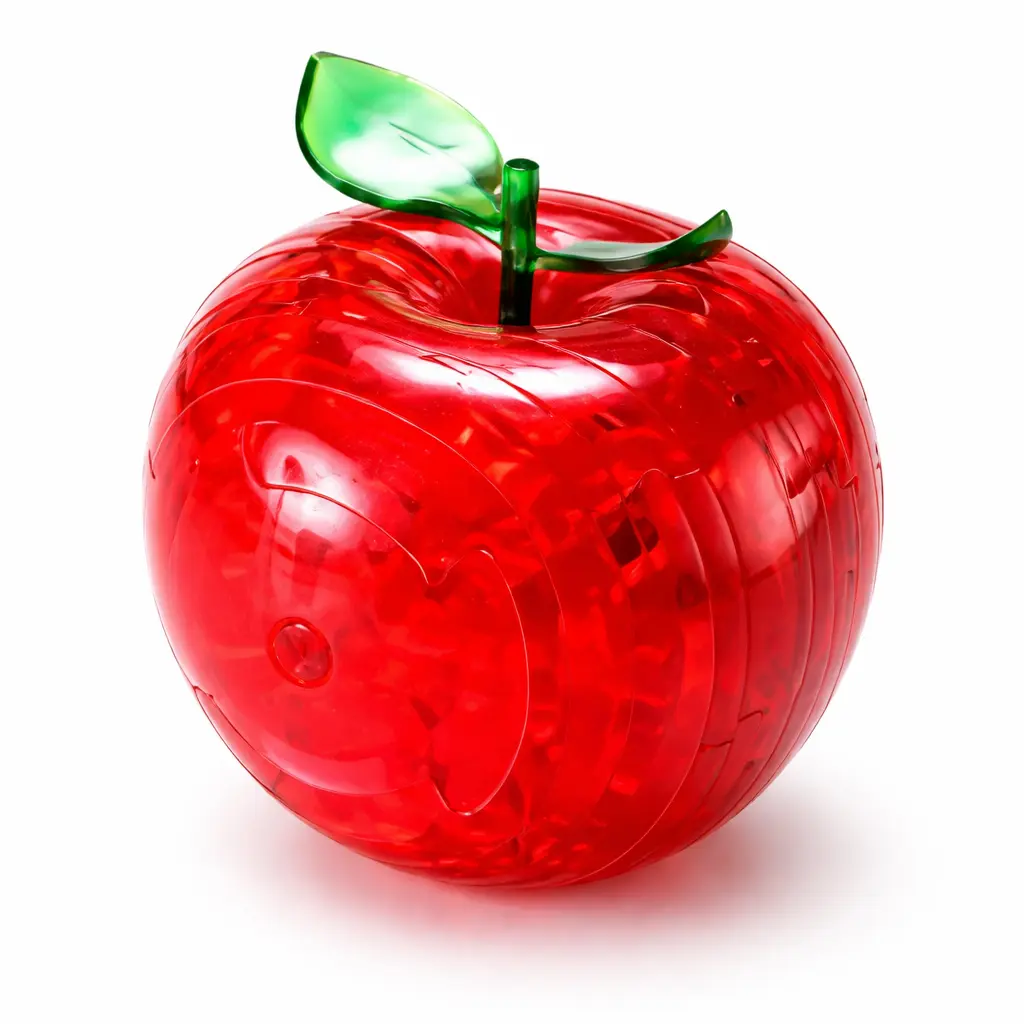
The 3D Crystal Apple Puzzle meets all three checks — visible color contrast, a repeatable assembly mechanism, and pieces large enough to keep. Confirm piece dimensions and reset difficulty on the product page before ordering, since those are the two specs that decide whether the gift gets used or abandoned. For a wider roster of silent options built for the open-plan office, the best fidget toys for ADHD adults at work covers additional choices that hold up in shared spaces.
01. Why Acrylic Puzzles Fit Adult ADHD Specifically
Those three checks — visible color contrast, a repeatable mechanism, and pieces large enough to keep — point to the deeper question of what makes acrylic specifically work for an adult-ADHD recipient. Transparency is the property that does most of the heavy lifting. Where a wooden puzzle hides its mechanism under opaque panels and a metal puzzle offers a cold, click-driven challenge, acrylic lets the solver see every notch, every slot, and every alignment point at any angle.
That visible progress is the first of four observable properties that separate an acrylic puzzle from the generic fidget-toy bin. A piece that seats into a transparent shell confirms the move worked; a translucent panel reveals whether the next slot is open; a finished form sits on a desk as a record that something was completed. For a buyer shopping for a recipient who routinely abandons half-finished books, that visible confirmation is the difference between a gift that earns a second session and one that goes in a drawer by Tuesday. Pieces that are too small to see at a glance will be the first to vanish. Skip them.
The second property is tactile feedback — the snap, click, or soft press that registers a correct move. Acrylic snap-fit tolerance varies by manufacturer, and that variation is something a buyer can check directly. Well-cut acrylic pieces seat with a firm, repeatable click and release with a slight twist; poorly cut acrylic either resists until the piece is pried off (and warped) or wobbles in a way the solve never recovers from. Compare that to a wooden brain teaser, which has a warm, grippy friction profile, and to a metal disentanglement puzzle, where the feedback is metallic and constant — acrylic sits between the two but quieter than both. For sensory regulation in a shared office, that sound profile matters: the snap of a magnetic cube or the clink of a cast crab will carry across a room, while acrylic assembly produces a low click that stays in the user’s hand.
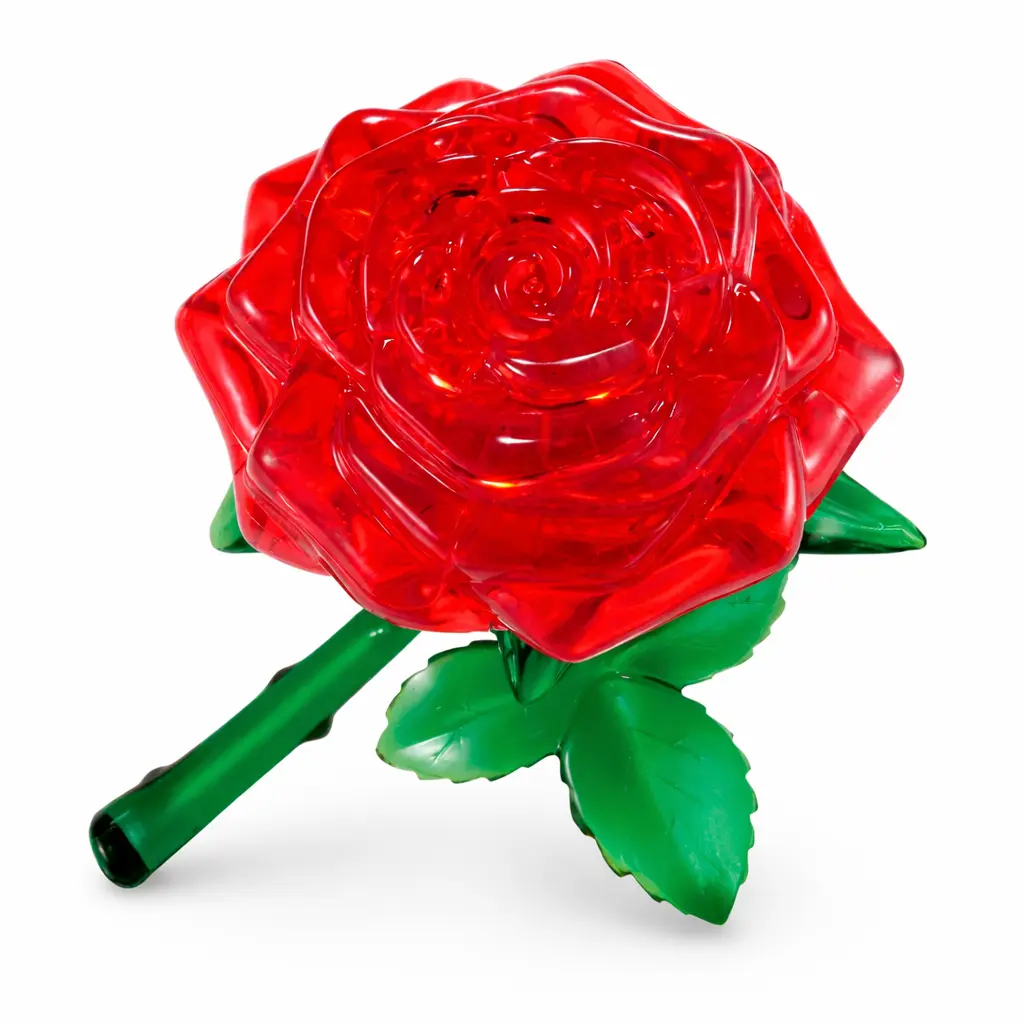
3D Crystal Rose Puzzle — $19.99
The third property is the novelty mechanism. Adults with ADHD often seek novelty, so a wooden cube or a metal crab can feel predictable once the solve is learned. A 3D acrylic puzzle, particularly a crystal-rose or crystal-apple form, has a discoverable shape the solver cannot predict — the assembly path is only revealed by rotating the pieces, and the finished form (a rose, an apple) is a small built-in reward. That maps to a “small win” use case rather than a “zone-out” use case, and the distinction is the one most fidget-toy marketing collapses. Zone-out toys (spinners, infinity cubes) are repeatable in the same motion forever and never deliver a finished object; small-win acrylic puzzles deliver both an end state and a desk-sized result. For a recipient who can’t finish a book but can hyperfocus for twenty minutes, a small-win puzzle out-performs any repeatable fidget.
The fourth property is a defined win state. A 3D crystal puzzle has a clear before and after. The before is a flat pack of acrylic panels; the after is a rigid, displayable object. That endpoint matters for a recipient who has learned, often painfully, that most projects end in abandonment, because the completed apple or rose is small enough for a desk, large enough to find, and worth keeping — proof, visible to anyone in the room, that something finished.
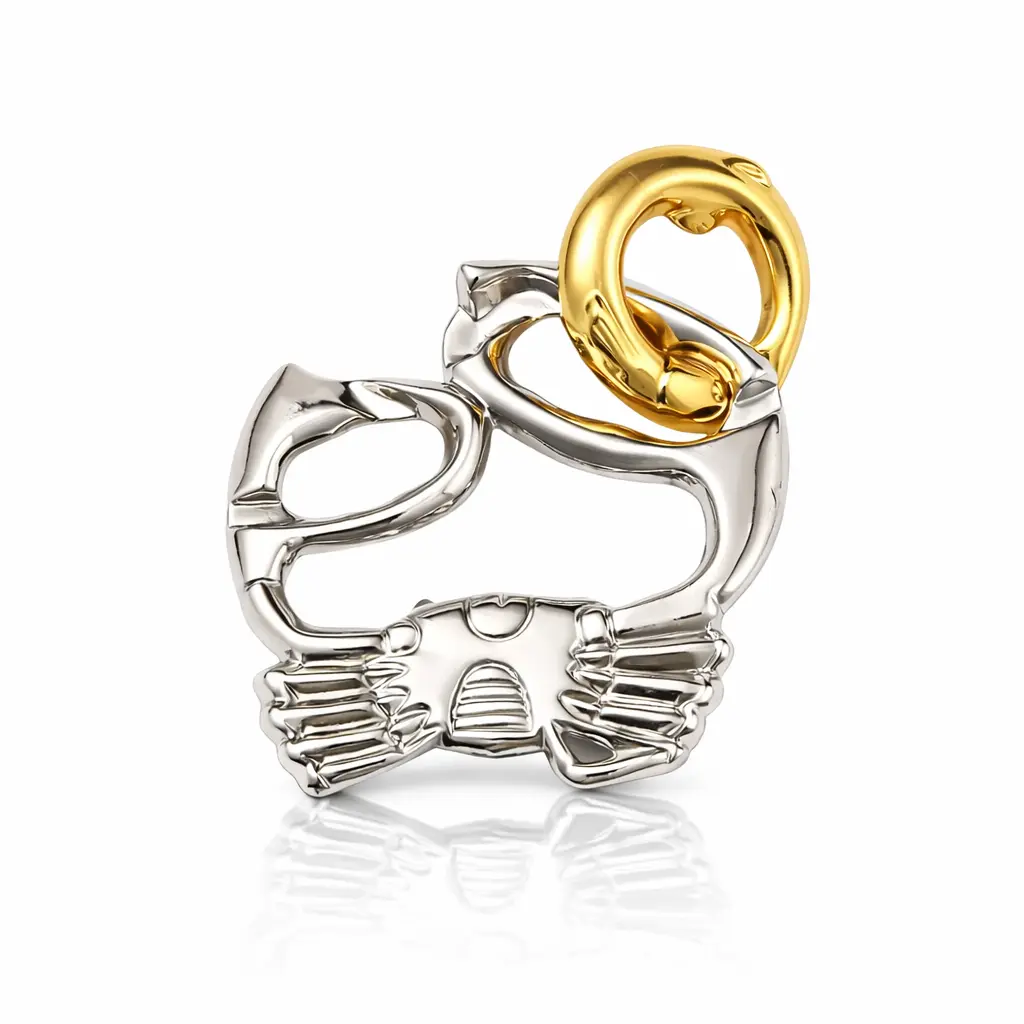
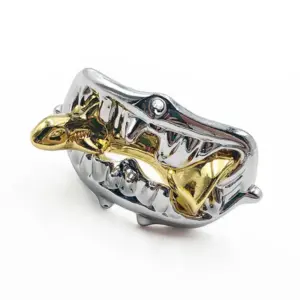
For contrast, a cast metal crab uses a different material logic — opaque, heavy, with a sound profile that crosses a quiet room. That’s the right tool when the recipient wants a desk object with weight and a one-time solve, and the wrong tool when they want a transparent, repeatable, low-noise build. Acrylic wins on transparency, sound, and visible progress; metal wins on tactile density and a sense of permanence. The buyer should pick the material that matches the use case, not the tag on the box.
Practical next step: before ordering any acrylic puzzle, confirm the piece count and the reset time on the product page. Lower piece counts finish faster, which suits the small-win use case and lowers the focus cost of starting. For the crystal-apple and crystal-rose forms, the finished shape is desk-sized, the acrylic transparency grade is high enough to keep the internal mechanism visible at every step, and the sound profile stays under the threshold most shared offices tolerate. That combination is what makes acrylic — not wooden, not metal — the material that genuinely fits adult ADHD. For a side-by-side on how crystal-clear acrylic compares with standard 3D assemblies on clarity grade, piece tolerance, and visible-progress payoff, a crystal puzzle vs regular 3D puzzle comparison walks through the differences.
02. The Four Checks Before You Buy an Acrylic Puzzle
Piece size is the leading indicator of fit — if a single component is smaller than 1 cm on any side, the puzzle will vanish under couch cushions, get swallowed by a curious pet, and break the tactile loop that makes the toy worth keeping. Measure before you buy, because most product photos hide scale.
Check 1: Piece Size Threshold
A piece smaller than a thumbnail is a failure mode disguised as a feature. Acrylic puzzles marketed as “mini” or “pocket” frequently use components between 5–8 mm — fine for a keychain, useless for an adult who sets the puzzle down mid-solve and forgets where they left it. The 3D Crystal Apple Puzzle and 3D Crystal Rose Puzzle are built around larger structural pieces, which is part of why they work as desk objects rather than pocket trinkets.
Reader action: find a ruler screenshot on your phone, compare it to the product image, and reject anything where the largest piece falls below 1 cm.
Fallback when the spec is missing: email the seller or look for a “scale” reference (a coin, a hand) in customer-submitted photos. If the only images are renderings on pure white, the seller is hiding the scale — skip it.
Check 2: Mechanism Type
Acrylic puzzles fall into four mechanism families, and the buyer should match the family to the recipient’s regulation style rather than the product photo:
- Interlocking — pieces fit together once, like a 3D jigsaw. One-time solve, high visible-progress payoff, then it sits on a shelf.
- Sliding — pieces move along tracks or channels. Repeatable, low cognitive load, good for zone-out use.
- Sequential — steps must happen in order, like a Luban lock. Medium challenge, visible progress, repeatable.
- Magnetic — pieces snap or repel. Fast reset, high tactile feedback, but can feel gimmicky after a week.
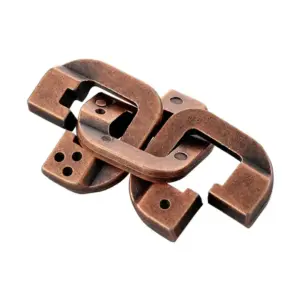
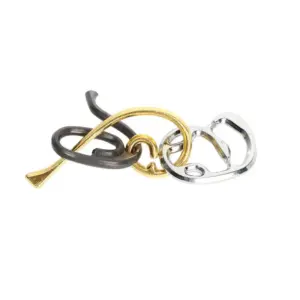
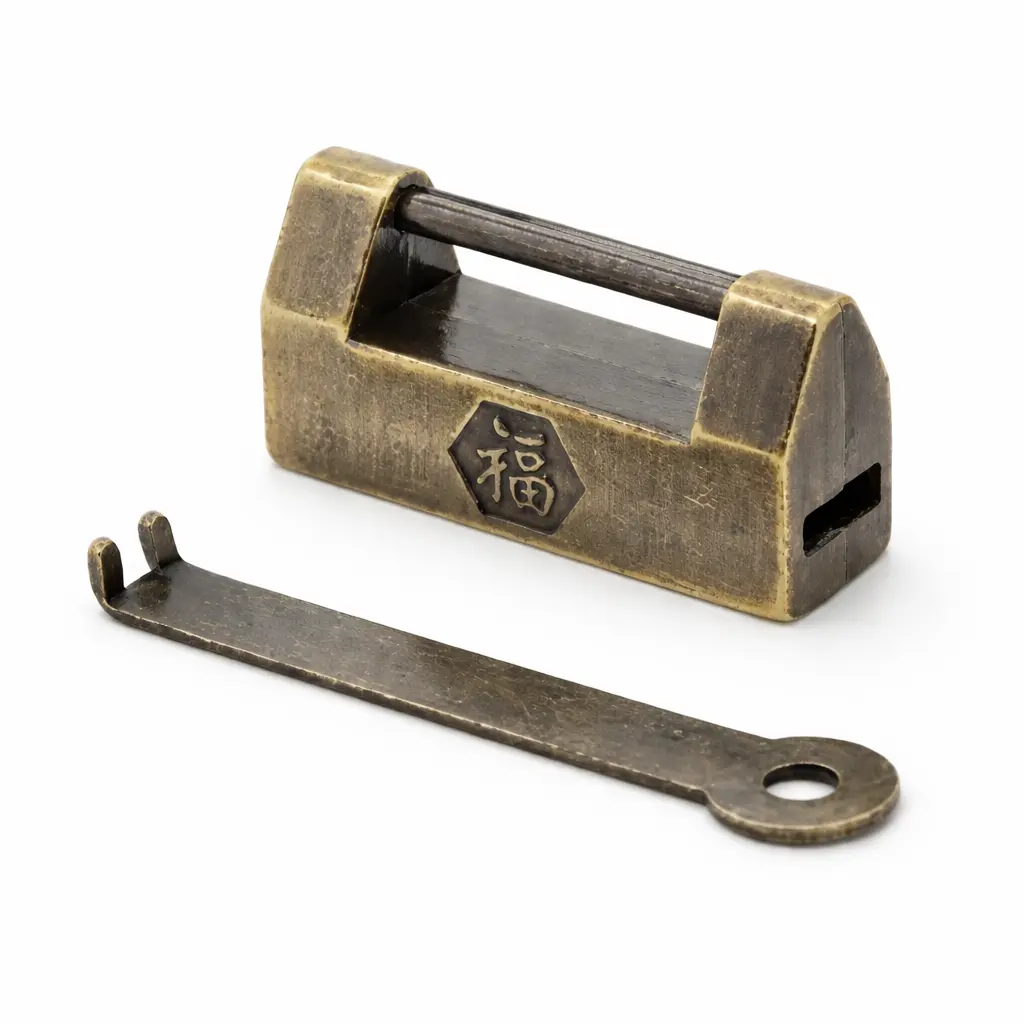
The Crystal Apple and Crystal Rose are interlocking forms with a visible internal structure — the right call when the recipient wants a “small win” with a displayable result. The 12 Piece Crystal Luban Lock Set is sequential, better when the recipient enjoys the process more than the reveal. Metal puzzles like the Chinese Old Style fú Lock with Key or the Metal Crab Puzzle lean sequential and one-time-solve, with a sound profile that some adults find regulating and others find grating.
Reader action: decide whether the recipient wants a zone-out toy (sliding, magnetic) or a small-win toy (interlocking, sequential) before browsing.
Fallback when mechanism is unclear: search the product name plus “mechanism” or “how to solve” on video — a 30-second clip tells you more than a 2,000-word listing.
Check 3: Transparency Grade
Cast acrylic and optical-clarity acrylic behave differently under desk lighting. Cast acrylic can have a slight blue or yellow tint that muddies the internal mechanism; optical-clarity acrylic reads as glass-like and keeps every internal component visible from any angle. For adult use, visible progress matters because the brain tracks completion without having to narrate it internally.
Reader action: zoom into product photos at 200% and look for haze, rainbow edges, or color cast around the internal seams. Clear = optical-grade. Hazy = cast.
Fallback when no close-up exists: check whether the seller describes the material as “PMMA optical grade” or simply “acrylic” — the former signals the higher transparency tier.
Check 4: Solo vs Collaborative
Most acrylic puzzles are single-player by design, but a few — sequential Luban locks and multi-piece sets like the 12 Piece Crystal Luban Lock Set — work as two-person problem-solving sessions. This matters if the buyer is a partner or parent who wants the gift to be a shared ritual rather than a solo desk object.
Reader action: if the recipient lives alone or works in a shared office, solo is fine. If the buyer wants a low-stakes bonding activity, look for sets with 4+ distinct components.
Fallback: assume solo unless the listing explicitly mentions “two-player” or shows multiple people in lifestyle photos.
The one check to do first: measure the piece. Everything else can be inferred from the product page; piece size cannot.
03. What to Avoid in an ‘ADHD-Friendly’ Acrylic Puzzle
A puzzle that passes the piece-size check can still fail by week two. The hardest warning sign to verify from a product photo is sound — specifically, whether the snap of a friction-fit acrylic piece reads as a quiet tactile confirmation in a home office or as a sharp crack in an open-plan workspace. Product listings almost never carry audio. That gap is where most “ADHD-friendly” fidgets get returned, even though fidget toys are widely marketed for sensory stimulation and focus with results that vary by individual.
Novelty-seeking and abandonment is a real pattern in many adult ADHD recipients, not just a marketing pitch. Each failure mode below describes a different way a gift can land on the desk and miss the engagement loop entirely.
1. Swallowable parts in a pet-or-kid household.
A 2cm acrylic component is engaging for an adult and an emergency vet visit for a small dog. The check is mechanical and does not need a ruler: can the smallest piece fit through a toilet paper roll tube? If yes, the puzzle fails any household with a cat, a toddler, or a labrador that considers puzzle parts a snack. The piece is the size of a thumbnail. Skip it.
2. Loud snap mechanisms.
Acrylic friction-fit parts can produce a sharp report when they seat, and that report travels further in a quiet open-plan office than the buyer expects. The check is not on the product page; it is in the review section. Search the puzzle name plus “loud” or “click” on a third-party forum before you commit. A novelty mechanism that gets exiled from a shared desk in week one is worse than no gift at all.
3. Kids’ branding on a gift for an adult.
The packaging signals the audience before the puzzle does. A wooden or acrylic product in a primary-color box with cartoon styling reads “ages 6 and up” and lands as infantilization for an adult recipient. The 18 Piece Wooden Puzzle, despite passing the piece-size check, sits in a category and style context that can read as a children’s product. The check is the listing’s lifestyle photos: does the product sit on a wood desk beside a notebook, or in a playroom next to a stuffed animal? Desk context beats classroom context every time.
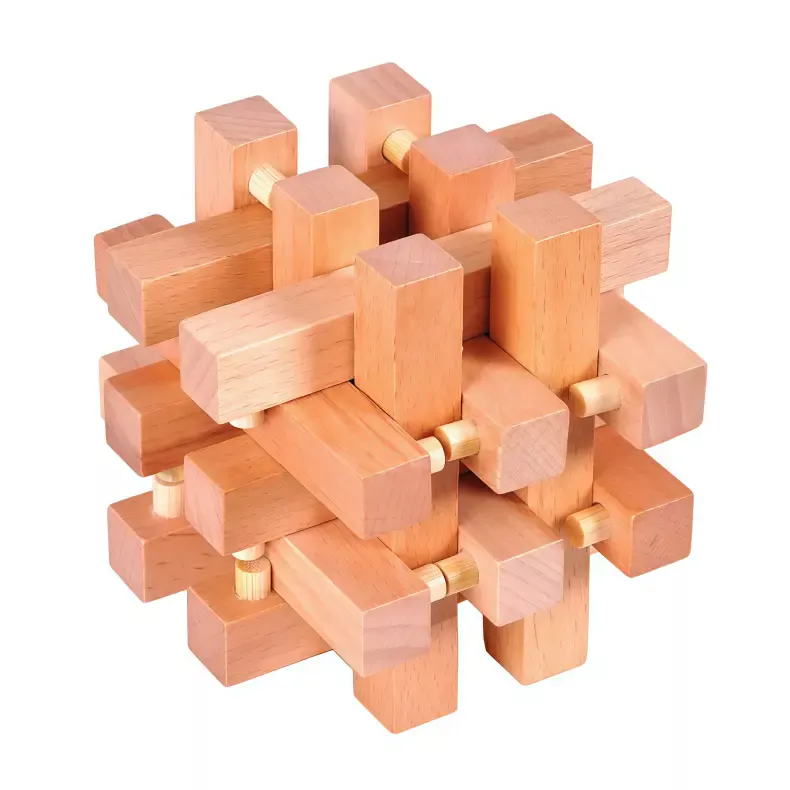
18 Piece Wooden Puzzle — $16.99
4. One-trick novelty mechanisms.
A Chinese Old Style fú Lock with Key solves once. The novelty loop for a recipient with ADHD rewards repeatability and visible progress, and a key-and-lock mechanism is a binary state — open or closed, with no intermediate steps to mark. The check is the listing’s “rebuild” or “reassemble” language. If it says “single solution” and stops there, the novelty dies on day two.
The one action before you commit: ask whether the recipient’s household has a pet, a young child, or a shared workspace. Two of the four failure modes collapse to zero when the answer is no. The other two — branding and novelty mechanism design — still need a listing-level read.
04. Mechanism Comparison: Which Acrylic Puzzle Matches the Recipient
Read the recipient’s desk before you read the product listing. If a hand-sized puzzle already lives there, match the mechanism to what’s missing — sliding for someone who needs quiet motion, sequential for someone who needs a defined win, interlocking for someone who picks things up and sets them down twenty times a day. The desk is the answer key. The listing is just the verification step.
The novelty-mechanism problem raised earlier — a puzzle that folds, clicks, or transforms through one fixed sequence and then becomes desk decoration — is essentially a mismatch between a “zone-out” mechanism marketed as a “small win.” Matching mechanism to use case is the fix.
Two use cases do most of the narrowing. The first is “zone-out” — a low-stakes motion loop the recipient can pick up during a meeting, while waiting on hold, or when focus has scattered, a small act of sensory regulation that doesn’t require a screen or a timer. The second is “small win” — a defined solve with a visible end state that closes the engagement loop bigger projects often leave open. Most commercially listed fidgets serve only the first. The second is where acrylic earns its price.
The four mechanism families you’ll see in acrylic puzzle listings map to these uses unevenly, and a decision table helps:
| Mechanism | Zone-out fit | Small-win fit | What to check |
|---|---|---|---|
| Sliding / track | High — repeatable, low-friction motion | Low — often open-ended, no finish | Noise level, track complexity in listing photos |
| Sequential disassembly (pull-apart, lock, key) | Medium — solvable but not endless | High — clear win state, reassembly often possible | Step count, whether the puzzle returns to start |
| Interlocking / 3D assembly | Low — high focus load to start | High — visible progress, defined end | Piece count, photo of completed form |
| Magnetic snap / alignment | High — click feedback, low cognitive load | Low — most lack a clear finish line | Magnet strength, piece count, whether small parts detach |
The “zone-out” column is where most cheap fidget listings live — repeatable motion, no accountability, no completion signal. The “small win” column is where the acrylic-puzzle category earns its keep, because a defined end state means the recipient gets the satisfaction of finishing something rather than the slow fade of an endlessly repeatable motion. For an adult with ADHD, that completion signal matters more than the mechanism itself.
For the recipient whose desk currently holds nothing, a sequential disassembly in clear acrylic is the safest first gift. The 3D Crystal Apple Puzzle is the clearest example in the tea-sip roster: a defined sequence of acrylic pieces, a visible apple form at the end, and a piece size that won’t disappear under couch cushions. For a household where the recipient already owns a puzzle box or two, a 12-piece crystal set introduces variety without repeating what’s already there.
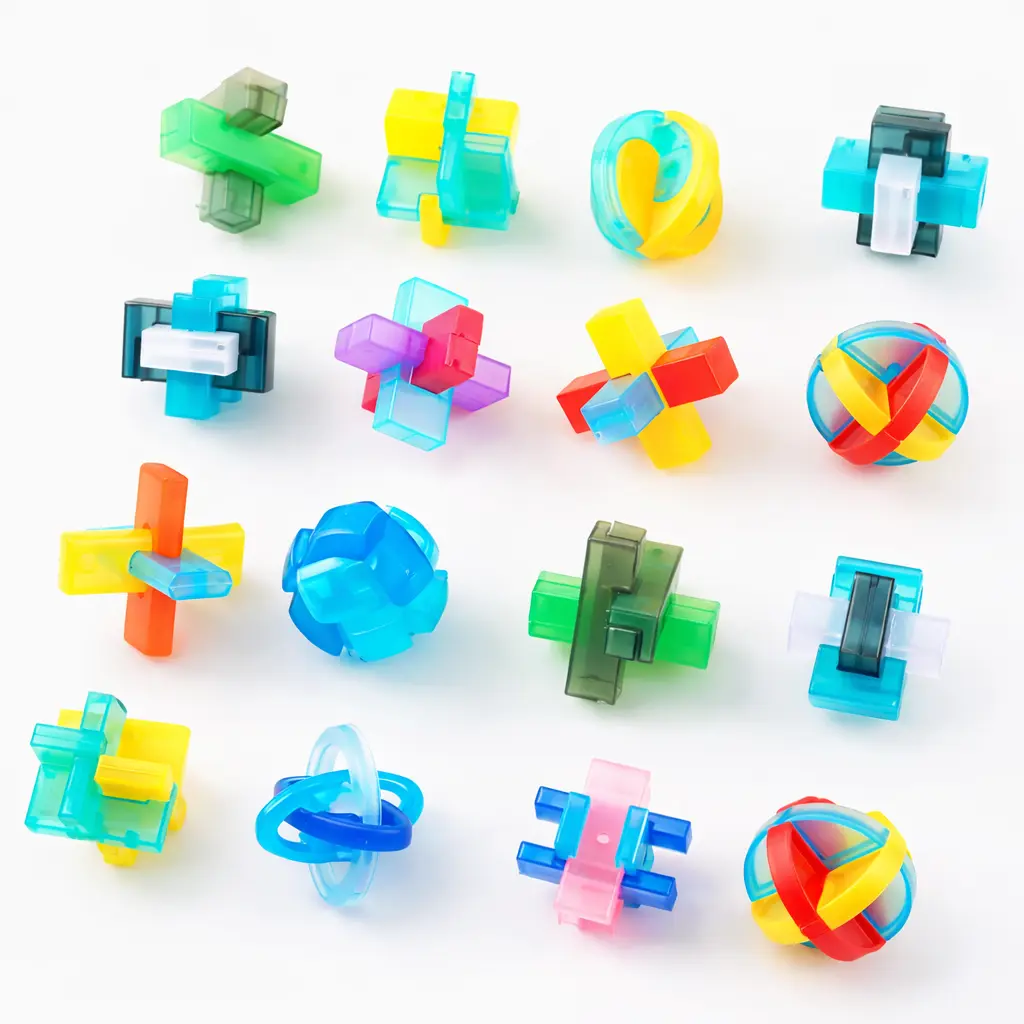
One practical next step: pick the mechanism column, not the product. The product is the cheapest cleanest listing inside that column. Verify piece size against the photo, verify the return window on the product page, and stop reading reviews once two say the same thing.
05. Gift-Giving Realities Most Buyers Forget for Adults with ADHD
The gifting detail that most often turns an acrylic puzzle into a drawer-abandoner is the opening barrier. If the box needs scissors, twist ties, four nested layers, and a six-point instruction sheet to even reach the product, the gift fails before the recipient has a chance to use it. Pick something the recipient can hold within thirty seconds of tearing paper.
Once you’ve matched the mechanism to the recipient in Section 04, the next decision is whether the gift is actually giftable. Four small details decide that, and competitors rarely cover any of them.
1. Packaging that requires focus to open. Rigid blister plastic with no tear-tab, a clamshell that demands scissors, or a manual printed in tiny type can defeat a recipient before they ever touch the puzzle. Look for a box that opens with one hand, or expect to do the unboxing for them. If the product page does not show the packaging, message the seller.
2. Gift-receipt viability for sensory-tool returns. A puzzle bought as a focus tool often misses the mark — the click is too loud, the weight is wrong, the color is off, the piece is too small. Verify the return window and the condition it accepts. The product page is the only reliable place for that policy, and it changes by region and season.
3. Household swallow-risk. If the recipient shares space with a cat, a dog, or a toddler, the piece-size check from Section 02 matters twice over. Anything under roughly 1 cm can disappear into carpet, but the same piece is also a veterinary or pediatric visit waiting to happen. A solid 3D acrylic shape with no detachable bits sidesteps this. The 3D Crystal Apple Puzzle is built as one continuous form — no loose pieces for a pet or child to find first.
4. Visible storage so the puzzle does not vanish into a drawer. An adult with ADHD often seeks novelty, so a puzzle stored in a closet will not get revisited. Pick a shape that earns a spot on the desk, a shelf, or a windowsill where light catches the acrylic transparency. If the recipient’s desk is already cluttered, a smaller piece that fits in a hand is the better pick.
One practical next step: before you click buy, look at three photos on the product page — the packaging, the piece in a hand, and the piece on a desk next to a common object for scale. If any of those three is missing, message the seller. A gift that survives the first two weeks in plain sight is a gift that gets used. For the wider gifting mechanics that make a puzzle actually get solved rather than abandoned, the real way to gift a puzzle that actually gets solved walks through the same logic from the recipient’s side.
Frequently Asked Questions
Are acrylic puzzles actually good for adults with ADHD, or just another fidget toy that will get abandoned? A well-chosen acrylic puzzle earns a visible spot where the recipient already works, and that placement is the difference between a tool and a trinket. The 3D Crystal Apple Puzzle keeps its continuous form on a desk and offers a clear win state — two factors that directly fight the abandonment cycle common in adult ADHD.
What’s the difference between an acrylic puzzle and a wooden one for focus? Acrylic delivers transparency and light play, which gives visible progress cues an opaque wooden cube simply cannot. Wood offers warmer tactile feedback and a heavier hand-feel; acrylic stays lighter, cooler, and visually quieter. Match the material to whether the recipient needs sensory weight (wood) or visual clarity (acrylic).
How big should the pieces be so they don’t disappear under furniture? Pieces larger than 1 cm are the practical floor for any adult-ADHD gift; anything thumbnail-sized migrates under keyboards and into couch seams within a week. One-piece continuous shapes sidestep the loss problem entirely because there is nothing to lose — a meaningful advantage for shared homes with pets or small children.
Can puzzles help with focus, or is that overstated? The small, repeatable win loop is a real sensory pattern, but the effect is individual and depends on whether the recipient treats the puzzle as a ritual or a task. Frame it as a calming, screen-free focus moment rather than a treatment; the pressure of “this should help me focus” undermines the relaxed state that makes the loop work in the first place.
How do I know if the acrylic will yellow or crack over time? UV exposure is the main cause of yellowing in lower-grade acrylic, so check the product page for any UV-resistance note and store the puzzle away from direct sunlight when not in use. Cracking usually traces back to thin snap-fit tolerances; one-piece cast acrylic forms tend to hold up better than multi-part assemblies that flex at the joints.
One next step: pick the recipient’s workspace, the actual surface where the puzzle will live, and choose the shape that earns that spot. The 3D Crystal Apple Puzzle reads as a desk or windowsill piece; the 3D Crystal Rose Puzzle works as a display object. Match the form to the surface, and the gift survives the novelty dip.
Where to Start
If the recipient and occasion checks above match, start with 3D Crystal Apple Puzzle. Check the current product page for the specifications that matter to your choice.
Sources and verification
- Product details and current specifications: Tea-Sip product page
Last updated: August 24, 2026