Quick Answer: Cast Metal Puzzle Retirement Gift: How to Match the Right One
Choose a cast metal disentanglement puzzle when the retiree enjoys hands-on mental challenges and you want something that doubles as a desk keepsake; skip it if the retiree has severe arthritis, prefers purely decorative items, or already owns a drawer full of puzzles. Three checks drive every recommendation below: mechanism type, personalization options, and presentation value. For a coworker or mentor retiring, a compact cast metal hook-style disentanglement is the strongest starting point because it fits in a coat pocket for travel, displays well on a credenza, and reads as a crafted object rather than a desk toy. The decision table below matches puzzle category to retiree profile so you can verify the fit before buying.
| Retiree profile | Best cast metal category | Difficulty cue to verify | Presentation move |
|---|---|---|---|
| Coworker or mentor (60s, hands-on learner) | Cast disentanglement (hook or ring) | Look for beginner-to-moderate level markings on the product page | Felt-lined gift box with a handwritten note |
| Engineer, builder, or hobbyist retiree | Interlocking burr or multi-piece cast | Look for “level 5+” or “challenging” descriptions; expect 15+ minute solve | Wooden display base or brass nameplate |
| Retired teacher or planner type | Sequential-move or coil puzzle | Look for “moderate” ratings and a documented solution path | Engraved plaque with years of service |
| Retiree with limited dexterity | Avoid; choose a larger wooden puzzle instead | Skip if the puzzle requires pinching small pieces | — |
For a broader look at complementary retirement-party gift formats, see unique puzzle gifts for a retirement party.
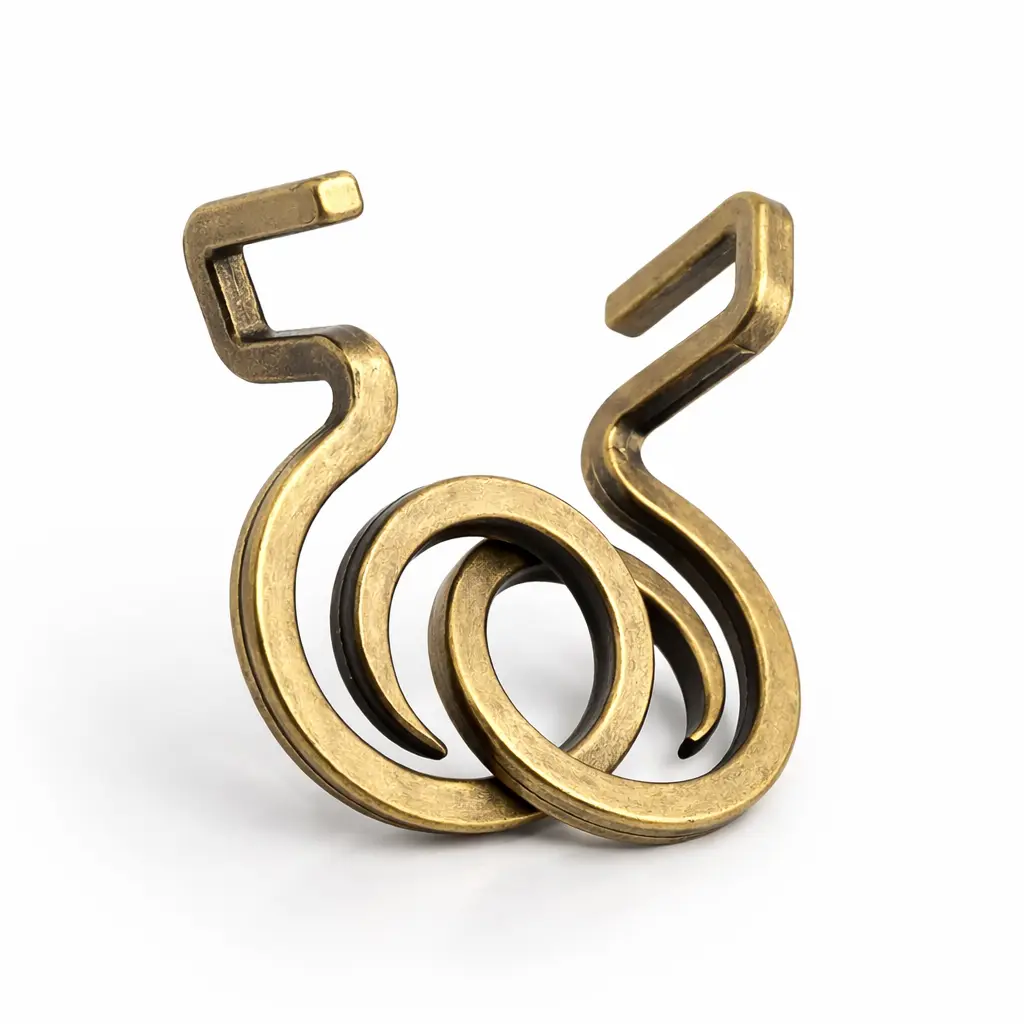
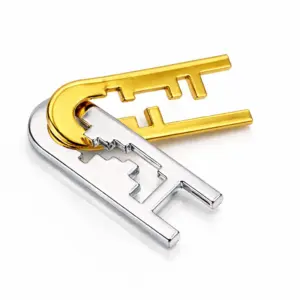
The Cast Hook Metal Brain Teaser is the top pick for the most common retirement-gift scenario: a coworker, friend, or family member buying for a 60-something retiree who likes puzzles but may not be a collector. At $13.99, it leaves room in the budget for personalization — an engraved plaque, a felt-lined presentation box, or a handwritten card — which is the layer that separates a retirement keepsake from a generic puzzle. Before you commit, confirm the mechanism type and difficulty level on the product page, and decide which presentation upgrade will carry the “this is for you” message.
01. Why a Cast Metal Puzzle Reads as a Meaningful Retirement Gift
Before choosing a mechanism, the real question is whether a cast metal puzzle fits the retiree. It works for someone who enjoys hands-on mental engagement and will keep it on a desk rather than in a drawer. It is the wrong choice if the retiree has limited hand dexterity, prefers decorative objects, or already owns dozens of puzzles. In those cases, a plaque, photo book, or experience gift lands better. That conditional is the rule every recommendation below is built on.
The hesitation is fair. Most retirement-puzzle pages on Etsy, Zazzle, and Amazon are dominated by jigsaws, wooden keepsake plaques, and printed puzzle-piece frames — objects meant to be looked at, not handled. A cast metal brainteaser breaks that pattern because it is a mechanical puzzle, a physical object requiring ingenuity to separate, take apart, or reassemble. The retiree is meant to interact with it, repeatedly, over years, rather than admire it once and shelve it. Four observable signals tell you whether a specific cast puzzle will function as a keepsake rather than a novelty.
Cast metal construction signals permanence. A cast metal brainteaser has weight in the hand, cool-to-the-touch surfaces, and a finish that does not degrade the way printed cardboard or painted wood can. Logica Puzzles frames its cast and metal puzzles as “made of high-quality materials,” and that material choice separates an object meant to be solved once and put away from something a retiree will pick up repeatedly over the next decade. It is also the format most puzzle collectors expect in a desk-side rotation, which means the retiree is unlikely to read it as a child’s toy or a filler gift from an office collection plate. Cast metal also tolerates years of pocket carry and the occasional drop without chipping the way a printed keepsake would. For a closer look at the weight, sound, and finish cues worth checking, see what makes a zinc-alloy cast puzzle feel high quality.
Master-inventor design lineage gives the gift a story. Many cast metal puzzles are signed by named designers — the Hanayama Loop, for example, was designed by Vesa Timonen as a personal gift, a detail Kubiya Games highlights as part of its positioning around “premium cast metal brainteasers, designed by master puzzle inventors.” That provenance turns a small metal object into a conversation piece: the retiree can cite the inventor, the year, and the design lineage the way they would cite a watchmaker. A printed jigsaw or a wooden keepsake plaque rarely carries that authorship, and it is that layer which makes a cast puzzle feel curated rather than ordered from a generic retirement-gift catalog.
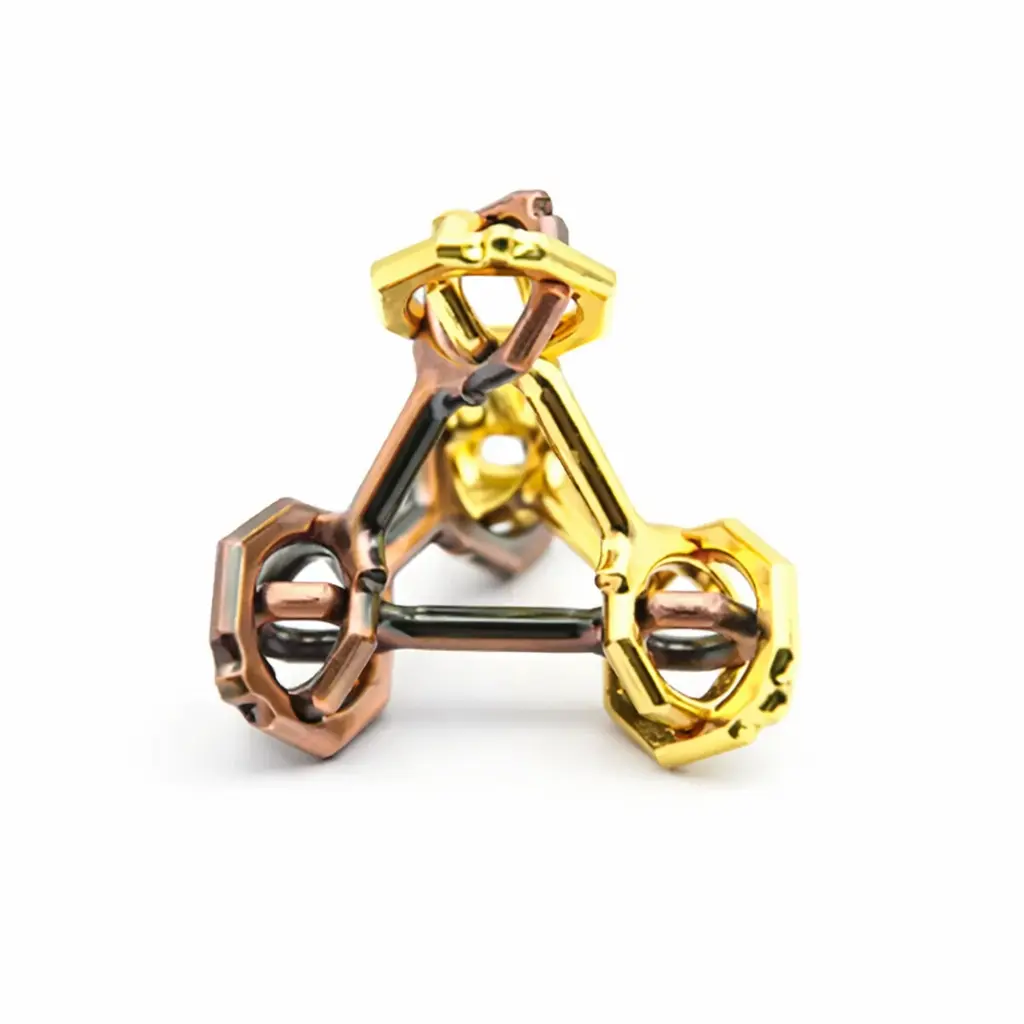
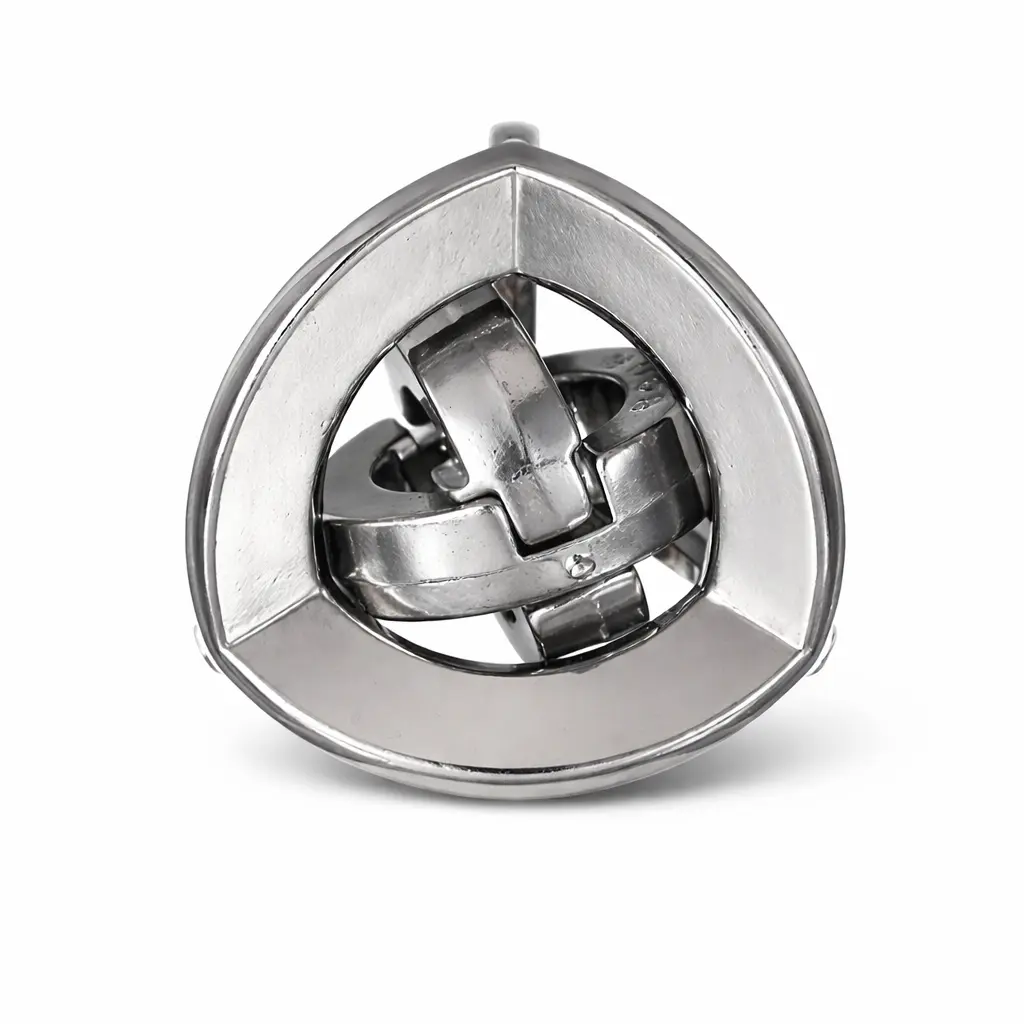
Desk-grade display value is built into the object. A well-cast metal puzzle is visually self-contained — it does not need a frame, a stand, or a backing card to look intentional on a credenza or a windowsill; the object is its own display, not a flat picture of one. For a retiree who will move from an office desk to a home office or study, that portability matters: the puzzle follows them, rather than being tied to a specific wall or plaque-mounting surface. The Cast Coil Triangle Puzzle, for instance, has a footprint and silhouette that read as desk sculpture even before the retiree has attempted to solve it. Cast metal puzzles earn the heirloom label because their finish holds up to decades of handling and shelf time in a way a printed card or wooden plaque cannot.
Repeated mental engagement is the core promise. Unlike a jigsaw, which is solved once and either framed or stored, a cast metal brainteaser rewards re-solving, being shared with a spouse or grandchild, and being set down and picked back up over months. That repeat-engagement is what turns a $13–$26 object into a desk keepsake that earns a permanent spot rather than a closet corner. It also makes the puzzle a low-effort daily ritual — a five-minute focus break — rather than a single-event ceremony tied to the retirement party itself. That contrast is the single biggest reason a metal brainteaser outperforms a wooden keepsake plaque as a retirement gift: the metal piece is designed to be used.
For buyers weighing the Cast Coil Triangle Puzzle against the hook-style picks in this category, the triangle reads more like a desk ornament while the hook reads more like a pocket companion. The single verification step before purchasing is the same either way: confirm on the product page that the mechanism is a disentanglement or take-apart style rather than an assembly puzzle, and that any stated difficulty sits in a range a casual, non-collector retiree will find satisfying.
02. Disentanglement, Interlocking Burr, or Sequential Move: Matching the Mechanism to the Retiree
Match the puzzle mechanism to the retiree’s temperament, not just to a generic “puzzle lover” label: a disentanglement puzzle suits the social, curious type who enjoys a one-hand conversation piece; an interlocking burr suits the engineer-builder who craves a multi-stage assembly; a sequential-move puzzle fits the methodical planner who likes to map every step before turning a piece.
Once you accept that a cast metal brainteaser is meant to be used, not shelved, the next decision is mechanism. A disentanglement puzzle is one where the solver must separate two or more interlocked pieces, typically a ring and a chain or two linked cast forms. That category matches a retiree who keeps a puzzle on a coffee table and shows it to visitors. The action is a single decisive reveal — pull the pieces apart, set them down, let someone else try. It rewards the curious mind that prefers one clean victory over a long, slow solve and reads well as a desk keepsake during a retirement party.
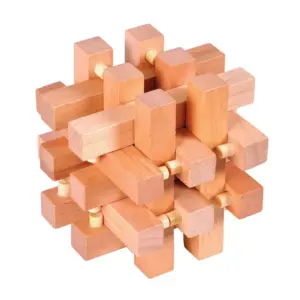
For the retiree who spent decades managing systems, building, or troubleshooting — the engineer, contractor, IT lead, machinist, or even the long-time teacher who liked to tinker — an interlocking burr is the right read. Burrs are assembly puzzles in which multiple cast alloy pieces lock together in a way that requires rotating, lifting, and sliding each stick in a precise sequence before the whole structure releases. That cast alloy construction is part of why burrs read as premium keepsakes rather than desk toys, and the weight, sound, and finish cues all read as premium. The retiree who always wondered “what’s inside this” will sit with a burr for an hour and come back the next morning to finish it. The social pressure is lower because burrs do not need an audience to feel rewarding.
Sequential-move puzzles sit between those two profiles. They ask the solver to perform a specific order of small moves — slide, rotate, shift, repeat — before the mechanism finally opens. A retiree who schedules retirement days in fifteen-minute blocks, or who reaches for Sudoku over crosswords, will usually prefer a sequential puzzle over a burr’s blank-page problem. The take-apart cast pieces in this category reward a tactile, almost mechanical rhythm rather than abstract spatial reasoning, which makes them a comfortable fit for a non-collector who still wants a real challenge.
Across all three categories, the single most important verification step for a 60+ recipient is the difficulty rating. Most cast metal puzzles carry a difficulty rating on the product page, often shown as a numeric level where lower numbers signal easier solves and higher numbers signal longer or trickier sequences. For a casual non-collector retiree, a mid-range difficulty generally reads as a satisfying challenge rather than a frustrating one. Confirm the stated difficulty on the product page before purchasing, and skip any puzzle marked at the top of the scale unless the recipient is already an active collector.
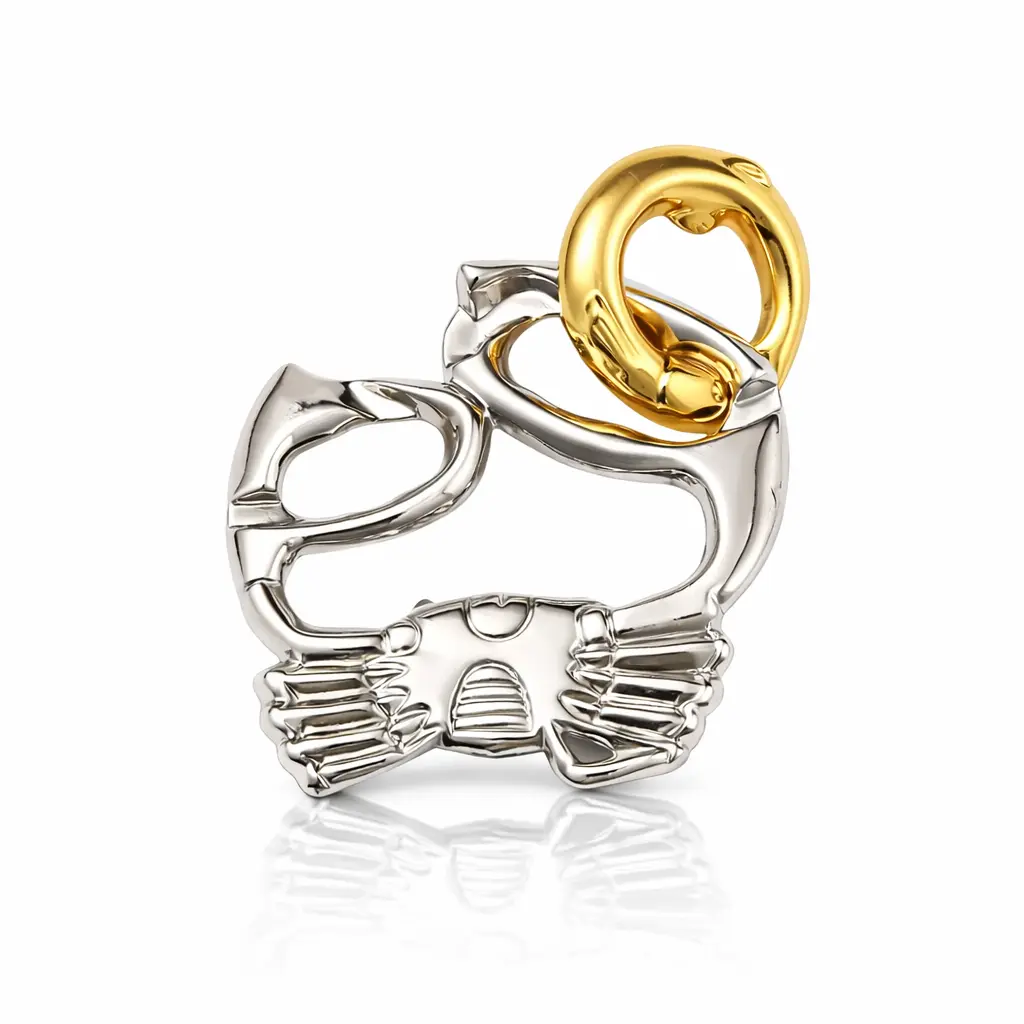
A few observable cues separate the three types on a shelf. Disentanglement puzzles usually show two distinct interlocked pieces — a ring and a bar, a hook and a loop. Interlocking burrs look like a tight bundle of sticks or rods. Sequential-move puzzles often look like a single solid object with no obvious seams. The Metal Crab Puzzle Cast Brain Teaser with Gold Ring is a take-apart style where the gold ring nests inside the cast crab body — a manageable challenge that doubles as a desk conversation piece and travels well for a retiree who splits time between homes.
For a retiree who enjoys variety, or for a coworker gift that needs to last past the retirement party, a multi-piece cast set offers a longer arc of engagement. The 5 Piece Cast Spiral Metal Puzzle gives the recipient five separate cast components to take apart and reassemble, which means weeks of repeated solving rather than a single afternoon.
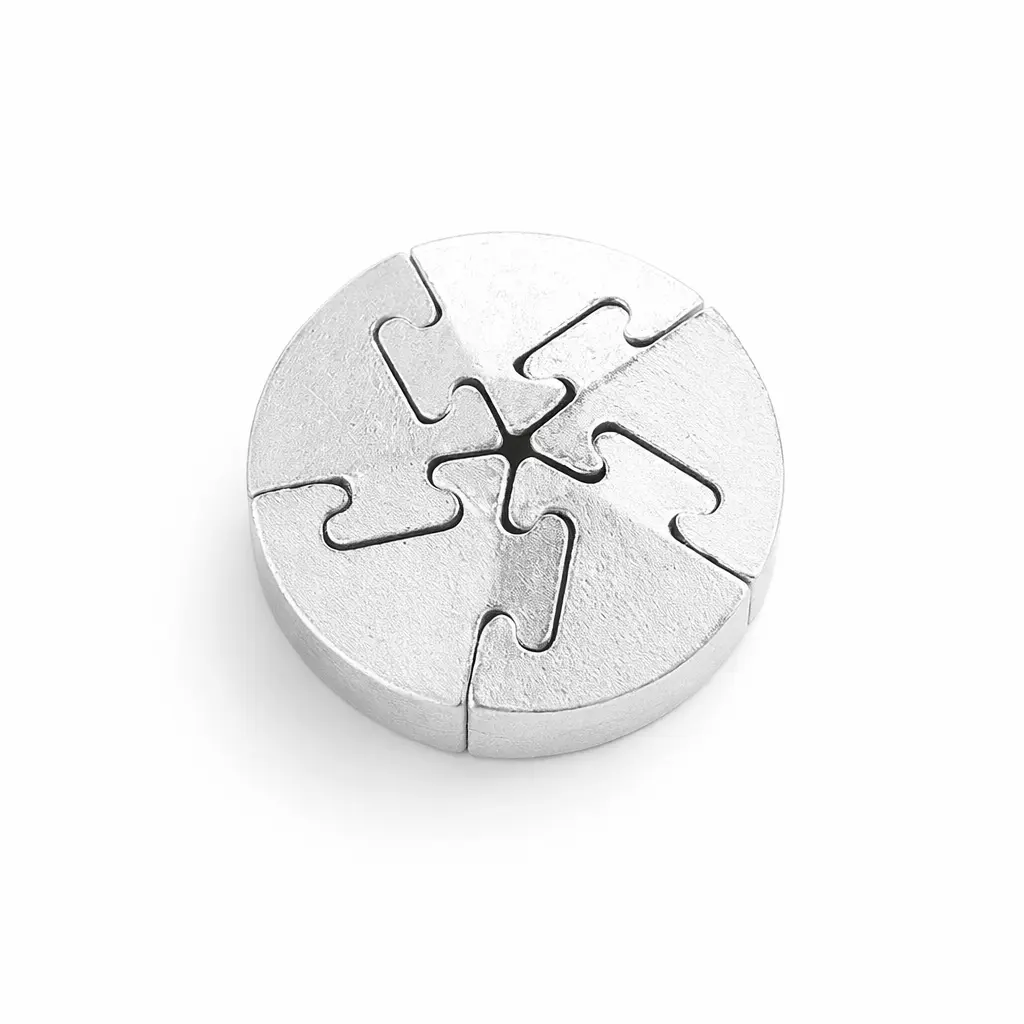
The buying action is narrow: pick the mechanism that matches the retiree’s temperament, then verify the difficulty rating on the product page before checkout. A mismatched mechanism turns a thoughtful gift into a drawer piece; a matched one becomes a daily retirement ritual.
03. Personalization and Presentation: Turning a $25–$60 Puzzle into a Retirement Keepsake
A matched mechanism still arrives looking like a shelf toy unless the presentation layer does its job. Personalization is the single decision that turns a $13.99 to $25.99 cast metal brainteaser into a retirement keepsake that earns a permanent spot on the retiree’s desk, and four small additions separate a thoughtful gesture from a drawer piece.
The checklist below is built from one principle: anything that adds the retiree’s name, years of service, or a short phrase anchors the object to a specific moment in time. The Creative Crafthouse blog on retirement-puzzle gifts makes the same point — engraving a name, year, or phrase is what separates a generic puzzle from a retirement gift, because personalization fixes the object to a memory rather than a hobby. Apply that same logic to a cast metal brainteaser and the piece stops being interchangeable with any other cast puzzle on the market.
The four-piece retirement presentation checklist:
Engraved plaque or brass nameplate — A small brass or wooden plate carrying the retiree’s name, retirement date, and a one-line phrase (“40 years, countless puzzles solved”) anchors the puzzle to the event. Confirm the seller engraves in-house or partners with an engraver before ordering; cast metal itself rarely accepts fine engraving, so the plaque sits on the display base or box lid rather than on the puzzle body.
Felt-lined or wooden display box — Cast metal deserves a presentation surface that matches its weight. A felt-lined wooden box, a hinged walnut case, or a small acrylic display stand all signal “keepsake” rather than “stocking stuffer.” Verify interior dimensions against the puzzle’s listed measurements on the product page; a loose-fitting box telegraphs an afterthought.
Handwritten retirement card paired with the solution leaflet — Most cast puzzles ship with a printed solution sheet. Tuck a handwritten card next to it explaining why you chose the specific mechanism, the difficulty rating, and what to do if the retiree gets stuck. This is the cheapest personalization step and the one retirees mention most often when they recall memorable gifts.
Optional: a small companion puzzle as a starter pair — For a retiree new to cast metal, a second lower-difficulty model creates a “starter and follow-up” pairing that signals long-term thought. The Cast Hook Metal Brain Teaser at $13.99 pairs naturally with a more complex primary gift as an accessible entry point; confirm both puzzles share a compatible difficulty range before checkout. For shoppers working within a tight group-gift budget, the roundup of 12 puzzle gifts under 25 that actually get reused maps cast metal and wooden options by long-term use, so a coworker collection plate can still land on something the retiree will pick up again next month.
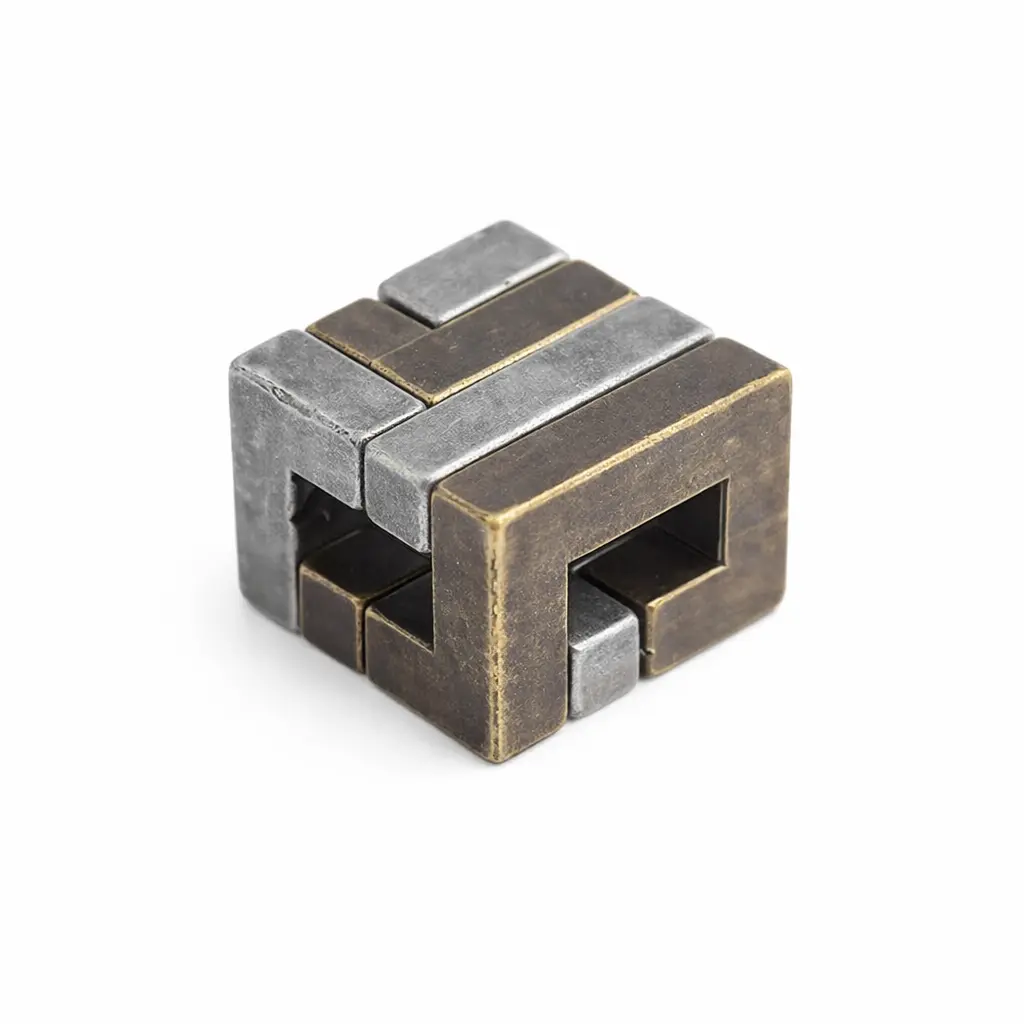
Cast Coil Pocket Puzzle — $18.99
Pocketable cast puzzles like the Cast Coil Pocket Puzzle at $18.99 are especially presentation-friendly because their compact form factor fits standard jewelry-style gift boxes, which are widely available and easy to engrave at local trophy or jeweler’s shops. Verify the box dimensions against the puzzle’s listed size before purchasing the box; this avoids the common retirement-gift mistake of an oversized box dwarfing a small object.
Display matters after the unwrapping too. A solved cast metal puzzle left on a desk gradually becomes a desk ornament the retiree reaches for during phone calls, coffee breaks, or restless evenings — a screen-free focus ritual rather than a decoration. Tea Sip’s tested guide on how to display a solved metal puzzle walks through seven display methods that range from a felt-lined drawer tray to a wall-mounted shadow box, so you can recommend a placement that suits the retiree’s workspace.
The single next action this week: pick the mechanism and difficulty using the decision table in section 02, then contact a local engraver or check the product page for personalization options before placing the order. Lead times vary by engraver, and waiting until the night before the retirement party is how a thoughtful gift ends up without a name on it.
04. Cast Metal vs. Wooden Keepsake vs. Jigsaw Plaque: Which Retirement Format Actually Lasts?
A cast metal puzzle is not too impersonal for a retirement if you treat the personalization step as mandatory, not optional. The cast metal object itself signals care through weight, material, and mechanism; the engraved plaque, felt-lined box, or accompanying card is what signals you specifically chose this for this person. Skip the personalization layer and a $15 puzzle does read as a random desk toy; add it and the same object reads as a keepsake the retiree keeps on the credenza next to the family photos.
Three retirement-puzzle formats compete for the buyer’s attention, and they fail at different things. Jigsaw plaques (the puzzle-piece acrylic and wooden shapes that dominate Etsy and Zazzle listings) photograph well for the retirement-party moment but rarely get touched again after the ceremony — they are a one-time reveal object, not a recurring engagement. Wooden keepsake puzzles (Creative Crafthouse’s career-themed wooden brainteasers, for example) age beautifully and can be solved repeatedly, but they compete with the retiree’s existing shelf space and lack the metallic weight that signals “premium gift” at the unwrapping. Cast metal brainteasers thread the needle: a small, heavy object that fits in one hand, displays on any desk without dedicated shelf real estate, and offers genuine repeated engagement because the retiree can re-solve it, loan it to visiting grandchildren, or leave it on the conference-room table at the farewell lunch.
The criterion that matters most is what happens on day 31, not day 1. Ask which object the retiree will still be reaching for a month after the party. A jigsaw plaque goes on a shelf; a wooden keepsake may get solved once and parked; a cast metal disentanglement gets picked up during phone calls, carried in a coat pocket, or set on the nightstand as a wind-down ritual.
Decision Table: Matching Format to Retiree Profile
| Retiree profile | Best-fit format | Tea-Sip pick (if cast metal) | What to verify before buying |
|---|---|---|---|
| Engineer, builder, or tinkerer | Interlocking burr / sequential-move cast metal | Cast Coil Triangle Puzzle ($25.99) | Piece count and internal clearance; ask the retailer for close-up photos showing the join tolerances. |
| Social retiree who hosts family | Disentanglement cast metal (small, pocketable) | Cast Hook Metal Brain Teaser ($13.99) | Confirm the hook dimensions fit a coat pocket or handbag so it travels to visits. |
| Coworker signing a group card | Compact disentanglement + engraved plaque | Metal Crab Puzzle Cast Brain Teaser with Gold Ring ($13.99) | Pool engraving funds early; confirm the plaque vendor’s character limit and font options. |
| Retiree who already owns many puzzles | Sequential-move or 5+ piece cast | 5 Piece Cast Spiral Metal Puzzle ($16.99) | Verify the piece count and solution path so the puzzle feels new, not repetitive. |
| Retiree preferring display over solving | Small cast piece with wooden base | Cast Coil Pocket Puzzle ($18.99) | Check that the base (sold separately) fits the puzzle footprint; measure both before ordering. |
| Retiree with arthritis or limited grip strength | Smooth, large-handle disentanglement | Metal Orbit Ring Cast Puzzle ($14.99) | Ask whether the pieces require pinching; request a video of the solution to judge the grip demands. |
A complementary reference for the format decision sits at Tea Sip’s metal vs wooden puzzle comparison, which walks through the same trade-offs from a collector’s angle.
The single next action this week: pick the format and Tea-Sip puzzle from the table above, then place the personalization order in parallel — the puzzle ships from the retailer while the engraver works on the plaque, so both arrive before the retirement date.
Frequently Asked Questions
With the format and puzzle already picked from the comparison above, the practical questions that surface before checkout are the ones that determine whether the gift lands well. These are the answers retirement-gift shoppers actually need.
Is a cast metal puzzle too impersonal for a retirement gift?
A cast metal puzzle reads as personal when the format, difficulty, and presentation match the retiree’s habits rather than the buyer’s assumptions. The same piece presented on a personalized wooden base with an engraved plaque is a different object than the same piece tossed in a plain box; the first is a keepsake, the second is a desk toy. Match by known habits: a methodically minded engineer receives an interlocking burr with an engraved plate, while a social retiree receives a disentanglement piece and a note that invites a grandchild to solve it with them.
Which difficulty rating suits a retiree in their 60s?
Start at the lower end of any manufacturer’s scale for a first cast metal gift, then step up only after the retiree has solved the first piece in under an hour. The commonly cited beginner tier sits at the easiest end of a 1–10 scale, with 7 and above suited to confirmed puzzlers. Because supplier ratings are not standardized, ask the retailer for a short video of the solution before ordering to judge the actual grip and dexterity demands.
Can a cast metal puzzle be engraved or personalized for retirement?
The metal itself rarely accepts engraving without a laser service, so personalization usually happens on a wooden display base, a brass nameplate, or an accompanying card rather than on the puzzle body. A third-party engraver can match the puzzle’s footprint and finish; send the retailer the puzzle’s exact dimensions before commissioning the plate. The Cast Hook Metal Brain Teaser at $13.99 pairs naturally with a custom base for under $40 total.
Are cast metal puzzles suitable for someone with arthritis or limited grip strength?
Cast pieces vary widely in handle size and required pinch force, so verify before buying. Larger, smoother disentanglement pieces such as the Metal Orbit Ring Cast Puzzle at $14.99 tend to be friendlier to stiff fingers than small interlocking burrs; ask for a solution video and look for motions that rely on sliding rather than pinching.
What is the difference between a disentanglement puzzle and an interlocking burr?
A disentanglement puzzle requires the solver to separate two or more interlocked pieces along a single solution path, while an interlocking burr assembles from multiple identical-looking pieces that must be taken apart and reassembled in a specific order, with difficulty scaling by piece count. The first rewards a curious, exploratory personality; the second rewards methodical planning.
How should a metal puzzle be presented as a retirement gift?
A felt-lined presentation box, a small wooden display base, and a short handwritten note on the solve method convert a stock puzzle into a ceremony-ready keepsake. Tuck the solution leaflet beside the card so the retiree can re-solve it later without frustration, and confirm the box interior dimensions match the puzzle’s listed size before gifting.
The next step: order the chosen puzzle this week and commission the engraved base in parallel, so both arrive before the retirement date.
Where to Start
If the recipient and occasion checks above match, start with Cast Hook Metal Brain Teaser. Check the current product page for the specifications that matter to your choice.
Sources and verification
- Product details and current specifications: Tea-Sip product page
Last updated: August 12, 2026